
Quick answer: To get out of buy now pay later debt, list every plan with its remaining balance, next due date and any interest or late fee, then stop opening new plans. Pay each one on time (misses are what create fees), and put every spare dollar toward the plan that frees up the most monthly cash or costs the most. Most pay-in-4 plans are interest-free when paid on schedule, so the real goal is getting your cash flow back before the next installment hits.
Key takeaways
- BNPL debt is dangerous because it is small, scattered and easy to forget, not because it is expensive on day one.
- Late fees and interest on longer plans are where the real cost hides.
- One master list with due dates beats ten app notifications.
- Pay order depends on the plan type: interest-bearing first, then smallest balances for fast wins.
- Pausing new BNPL purchases for 90 days is the single most powerful move.
Pay-in-4 plans feel harmless. Four payments of $25 does not look like a $100 decision. But when a shopper in Phoenix, Columbus or Charlotte has six or seven of these running at once, the payments stack up on top of rent, car notes and credit cards.
If your installments are already crowding out your budget, you can request a free look at your options to lower your interest rate using the form on this page. Then read on for the DIY plan.
Why Buy Now, Pay Later Debt Gets Out of Hand
Each plan is small, so none of them sets off an alarm. The trouble is the overlap. Most pay-in-4 plans collect the first payment at checkout and the rest every two weeks, so the money leaves your account on a rolling schedule.
Here is how the stack builds:
- Week 1: You buy shoes with one app. First payment due now.
- Week 2: A second app covers a gift. Another first payment, plus the shoes’ second payment.
- Week 4: Three plans, three due dates, all hitting before your next paycheck settles.
- Week 6: One payment bounces, a fee lands, and the whole month tilts.
Because the plans are spread across several apps and email receipts, it is easy to lose track of the total. That is why the first step is always to see everything in one place.
For a wider look at how these balances fit with other debts, see our BNPL and other debt guide.
Step 1: Build Your BNPL Master List
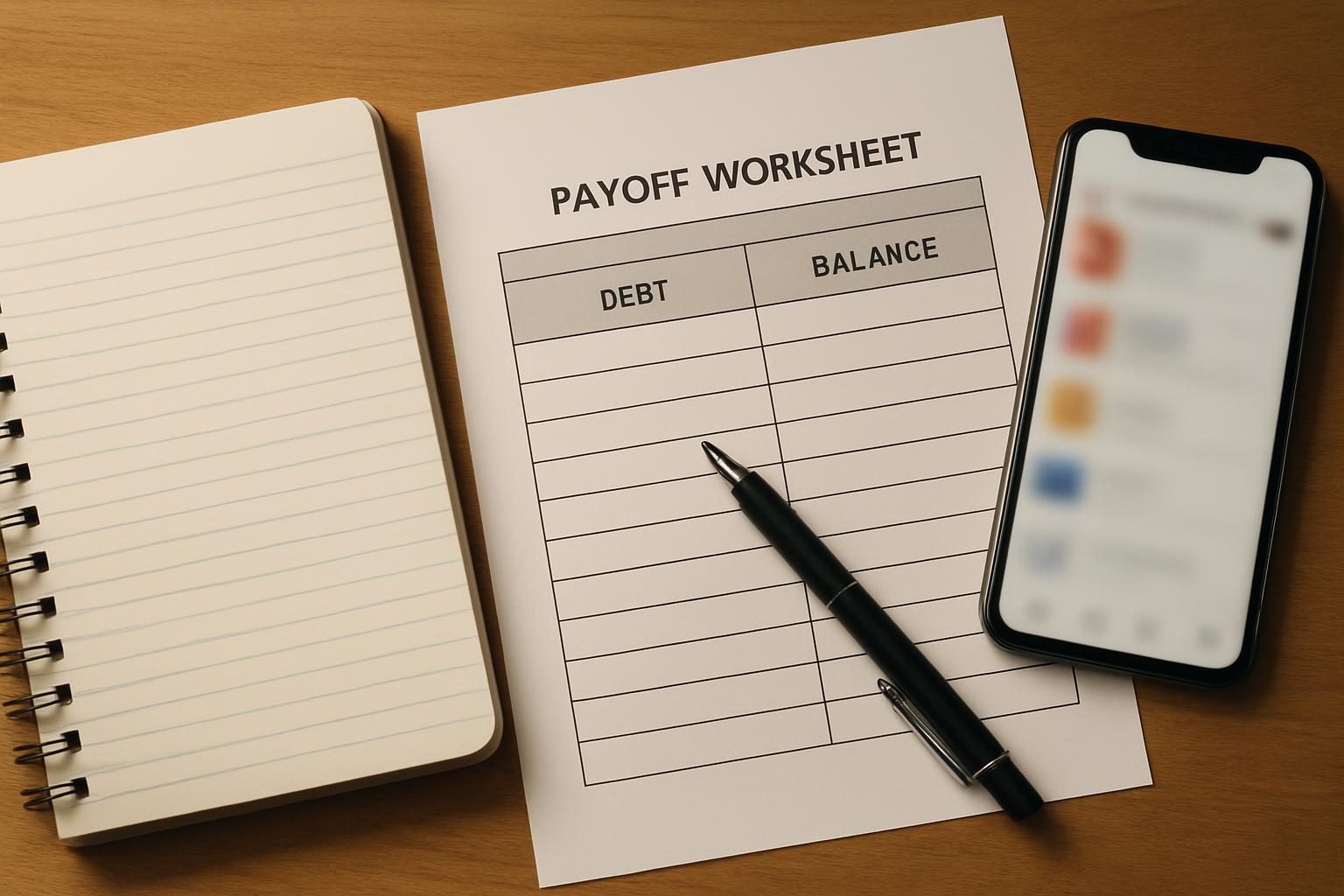
Grab a notebook, a spreadsheet or a printed worksheet. Log into every BNPL app and check your email for receipts from the last 60 days. Then record one row per plan.
Your master list should include:
- Merchant or item so you remember what it was.
- Provider (whichever app or card network runs the plan).
- Remaining balance and number of payments left.
- Next due date and amount.
- Interest rate, if any. Longer plans (often 3 to 36 months) can carry interest, sometimes in the double digits. Check your terms.
- Late fee and what triggers it.
- Autopay on or off and which account or card it pulls from.
Add up the total remaining balance and the total due in the next 30 days. That second number is your real monthly BNPL bill. Many people are surprised by it.
Pro tip: Sort your list by due date, not by size. The plan due this Friday matters more than the biggest balance.
If you want a ready-made layout, our debt snowball worksheet works well for this, and the free debt snowball spreadsheet lets you sort and total automatically.
A $25 payment is easy to ignore. Seven of them, due in the same week, are not.
Step 2: Stop the Bleeding With a Calendar and a Freeze
Before you optimize payoff order, stop adding new plans. A 90-day BNPL freeze gives your list room to shrink. Delete the apps from your phone if that helps, and turn off BNPL options in saved checkout settings.
Then protect your due dates:
- Put every due date on one calendar with an alert two days before.
- Move your paycheck buffer. Keep one pay period’s worth of installments in checking so autopay never bounces.
- Switch autopay to a debit account where possible. Many plans can also pull from a credit card, which means you could be paying credit card interest on a BNPL purchase. Check what each plan uses.
- Check for fee waivers. Some providers will refund a first late fee if you ask and pay promptly. It is not guaranteed, but it costs nothing to try.
Late fees vary widely by provider and plan, and some charge none at all. The point is to know your exact exposure on every line of your list so a single missed payment does not snowball. The Consumer Financial Protection Bureau publishes research and consumer guidance on BNPL products at consumerfinance.gov if you want to understand your rights.

Step 3: Choose Your Payoff Order for Stacked Plans
Interest-free plans do not cost extra if paid on time, so payoff order is about cash flow and risk. Use this order:
- Anything with interest or a past-due balance. Clear these first, since they are the only ones costing you more every day.
- Plans on a credit card. Paying BNPL with a card that carries a balance can double the cost. Move these off the card first.
- Smallest remaining balances. Finishing a plan removes a due date entirely, which lowers your risk and frees up a payment slot. This is the snowball effect in action.
- Everything else on schedule, paying just the minimum installment until the earlier targets are gone.
Should you pay off interest-free plans early? Usually there is no savings in doing so, but clearing a plan early can free up monthly cash and shrink your to-do list. Once the high-risk plans are gone, directing extra money at the next-smallest balance is a legitimate way to build momentum.
To see how these ideas scale across every debt you owe, read our debt payoff plans guide and the step-by-step debt avalanche method. You can also compare approaches in the upcoming debt stacking explainer.
Every plan you finish removes a due date, and fewer due dates mean fewer chances to slip.
Step 4: Find the Extra Cash to Pay BNPL Debt Faster
You do not need a raise. You need a few hundred dollars freed for 60 to 90 days. Try these:
- A 30-day spending pause. Our 30-day no-spend challenge is built for exactly this.
- Sell unused items. Those impulse buys you financed may still have resale value.
- Redirect the freed-up installment. When one plan ends, send its payment amount to the next target instead of letting it vanish into spending.
- Use a structured challenge like the 52-week money challenge chart or other debt payoff challenges.
Run your numbers through the Debt Burn-Down Calculator to see your debt-free date with and without that extra cash.
Step 5: Track It and Consider Lower-Interest Options
Tracking turns a vague worry into a countdown. Check your master list every payday, cross off finished plans and update the total. A visual tracker helps; see our free debt payoff tracker printables.
If your BNPL balances sit alongside credit card debt, ask whether a lower rate could shorten the road:
- 0% balance transfer cards can pause interest on card balances. Learn the mechanics in our balance transfer guide, and run the math with the balance transfer calculator.
- Consolidation loans can roll scattered balances into one fixed payment, though approval and rates depend on your credit.
These only help if you stop adding new debt. Always compare fees, terms and total cost before you commit, and consider talking with a qualified financial professional if your situation is complicated.
Ready to see what is available? Request free, no-obligation rate options with the form on this page, or browse lower your rate for more detail.
Frequently Asked Questions
Does buy now pay later debt hurt my credit score?
It depends on the provider and plan. Some short pay-in-4 plans are not reported to credit bureaus, while longer financing may be. Missed payments or accounts sent to collections can hurt your credit. Check each provider’s terms.
Is it better to pay off BNPL or credit cards first?
Usually credit cards first, because they carry interest every month, while most pay-in-4 plans are interest-free if paid on time. The exception is a BNPL plan that carries interest or is past due.
What happens if I miss a BNPL payment?
You may be charged a late fee, lose access to new plans, and in some cases be reported or sent to collections. Contact the provider right away; some offer a grace period or a revised schedule.
Can I consolidate several BNPL plans into one payment?
Not directly in most cases, but you may be able to pay them off with a personal loan or a 0% promotional card, leaving one payment. Run the numbers first, including fees, and remember that consolidation only works if you stop opening new plans.
See free options to lower your interest rate
A partner will review your options with you, free and with no obligation.
