
Quick answer: The best way to use your tax refund to pay off debt is to set aside a small emergency cushion first, then send the rest to your highest-APR balance. If a small balance can be wiped out completely, that can be a smart exception because it frees up a monthly payment right away.
Key takeaways
- Start with a starter cushion so a surprise bill does not push you back onto a card.
- After that, the highest APR is usually where each refund dollar saves the most interest.
- Clearing a small balance outright can free up cash flow and keep you motivated.
- Do the math before you decide. A 10-minute calculation beats a gut feeling.
- Pay the lump sum to principal, then redirect the freed-up payment to the next debt.
A tax refund is the closest thing most households get to a one-time lump sum each year. Used well, it can knock months or even years off your payoff date. This guide gives you a simple order of attack so every refund dollar does the most work.
Want to see if a lower rate could stretch your refund even further? You can request free options to lower your interest rate using the form on this page.
Why a Refund Is Your Best Debt-Payoff Weapon
A refund arrives all at once, which is exactly how interest works against you. Interest accrues daily on your balance, so a lump sum reduces the base that interest is charged on immediately.
Here is a simple example. Say you owe $4,000 on a card at 24% APR. Roughly speaking, that costs about $80 a month in interest. Put $2,000 of your refund on it and the monthly interest drops to about $40, even if you change nothing else.
- It is found money. You already built your budget without it, so you will not feel the loss.
- It works instantly. No waiting months for small extra payments to add up.
- It compounds. Lower interest means more of every future payment hits principal.
Want to see your own numbers? Plug your balances into the Debt Burn-Down Calculator with and without the refund and compare payoff dates.
Step 1: Build a Small Emergency Cushion First
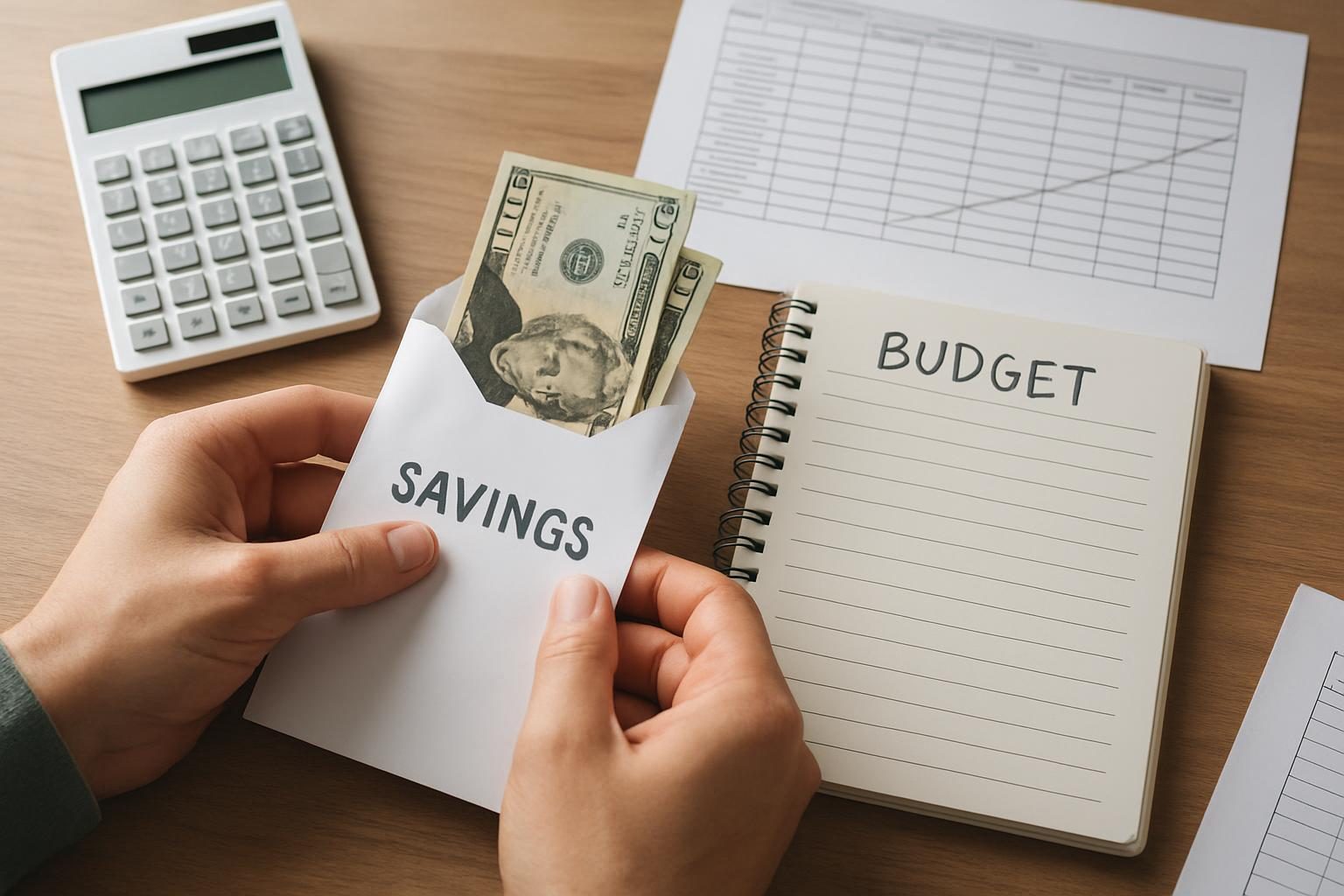
Before you throw the whole refund at debt, hold back a starter cushion. Without one, a flat tire or a copay can land on a credit card, and you end up borrowing again at 20%-plus APR.
How much is enough? A common starting target is $500 to $1,000, or about one month of bare-bones expenses if your budget is tight. That is an estimate, not a rule, so adjust it to your life.
- Steady paycheck, no dependents: a smaller cushion may be enough.
- Variable income or kids: lean toward the higher end.
- Already have savings: skip this step and keep going.
Pro tip: Park the cushion in a separate savings account so it does not blend into your everyday spending. Out of sight keeps it for real emergencies.
Not sure whether to fund savings or pay down cards first? Our planned guide on emergency fund versus credit card payoff will go deeper on that tradeoff.
A $500 cushion costs you a little interest today and can save you from a new card balance tomorrow.
Step 2: Aim at the Highest APR
Once your cushion is set, the math-first move is the debt with the highest interest rate. Every dollar there prevents the most future interest. This is the heart of the avalanche method, which we compare in Debt Snowball vs. Avalanche.
Rank your debts by APR, not by balance:
- Credit cards and store cards often sit around the high teens to high 20s APR.
- Personal loans and some BNPL balances vary widely.
- Auto loans and student loans are often lower, though some are not.
- Mortgages are usually the lowest-priority target for a refund.
Here is a quick comparison of where $2,000 does the most work (rates are illustrative):
- $2,000 on a 27% card: saves roughly $540 a year in interest.
- $2,000 on a 7% car loan: saves roughly $140 a year.
- $2,000 on a 4% student loan: saves roughly $80 a year.
The gap is huge. High-APR debt is where a refund earns its keep. If you are weighing investing instead, see Pay Off Debt or Invest? A Simple Rule by Interest Rate.
Step 3: Knock Out the Smallest Balance When It Makes Sense
Sometimes the smartest move is not the highest APR. If your refund can fully erase a small balance, you eliminate a minimum payment, one less due date, and one less statement to track.
Say you have a $650 store card at 22% and a $9,000 card at 25%. Paying off the $650 card with part of your refund frees its $35 minimum. You can then add that $35 to the larger card every month. That is the idea behind debt stacking and the rollover payment.
Use the smallest-balance move when:
- The refund fully clears the balance, not just part of it.
- The APR is not far below your highest rate.
- You need a motivation win to keep going.
If you like seeing the order laid out, the Debt Snowball Calculator will sequence your debts and show payoff dates.
Paying off one small account entirely can free a monthly payment that keeps working for you all year.
A Simple Refund Split You Can Copy
You do not have to pick one lane. Here is a sample plan for a $3,000 refund, using rough, illustrative numbers:
- $500 to a starter emergency cushion.
- $650 to wipe out a small, high-rate balance entirely.
- $1,850 to the highest-APR card.
Then take the monthly payment you just freed up and add it to the next balance in line. Small habits like that are what turn one refund into a real payoff plan. For the full framework, see How to Pay Off Debt Fast: The Burn-Down Plan.
A few cautions before you pay:
- Keep paying minimums on every account so you avoid late fees.
- Specify the payment goes to principal on installment loans like auto loans.
- Do not close paid-off cards in a panic. Just stop using them.
Make the Refund Go Further With a Lower Rate
A refund pays down principal. A lower interest rate makes every future payment hit harder. Combining the two is powerful.
- 0% balance transfer cards can pause interest for an intro period, though most charge a transfer fee, so run the math. See our balance transfer guide and the common mistakes that wipe out the savings.
- Consolidation loans can swap several high rates for one fixed rate. See whether a consolidation loan actually helps.
- Refinancing may lower the rate on student, auto, or mortgage debt, depending on your credit and the loan.
Qualifying rates depend on your credit, income, and the lender, so nothing here is guaranteed. If you want to see what is available to you, request your free rate-lowering options using the form on this page. You can also browse the lower your rate page.
Mistakes to Skip With Your Refund
- Spending it all on a splurge. A small treat is fine. Setting aside 5% to 10% for fun can keep you on track.
- Paying off low-rate debt first. That leaves expensive interest running.
- Skipping the cushion. One emergency can undo the progress.
- Forgetting to redirect the freed-up payment. If that money drifts into spending, you lose half the benefit.
If your refund will be small, or you owe taxes instead, the same logic applies to any windfall. See Paying Off Debt on a Tight Income for a realistic approach, and our planned guide on using a windfall to pay off debt for other lump sums.
Owe the IRS rather than expect money back? Read IRS Payment Plans. For official refund timing and status, the IRS tool at irs.gov/refunds is the authoritative source.
Ready to turn your refund into a lower rate and a faster payoff? Request free options to lower your interest rate using the form on this page.
Frequently Asked Questions
Should I use my whole tax refund to pay off debt?
Not necessarily. Many people do best by holding back a small cushion first, then sending most of the rest to debt. A modest amount for something enjoyable can help you stay motivated.
Which debt should I pay first with my refund?
Usually the one with the highest APR, since that saves the most interest. The exception is a small balance your refund can fully clear, which frees a monthly payment right away.
Is it better to pay off debt or save my refund?
A starter emergency cushion comes first. After that, paying down debt charging 20%-plus APR usually beats what a savings account earns. For more, see our guide to debt payoff plans.
Can I use my refund on student loans or a mortgage?
You can, but those rates are often lower than card rates, so they are usually lower priority. If you do, check that the extra goes to principal. Our guides to student loan payoff and mortgage payoff explain how.
This article is educational, not personalized financial advice. For decisions specific to your situation, consider talking with a qualified financial professional or nonprofit credit counselor.
See free options to lower your interest rate
A partner will review your options with you, free and with no obligation, so your refund goes further.

