
Quick answer: To make extra student loan payments that cut principal, send the extra money as a separate, clearly labeled payment (or use your servicer’s “extra payment” option), tell the servicer which loan to apply it to, and confirm it was not just applied to next month’s bill. Always check your next statement to verify the extra went to principal and that your due date did not move.
Key takeaways
- Extra money only helps if it lowers principal, not if it just prepays future bills.
- Aim extra payments at the loan with the highest interest rate first (the avalanche approach).
- Federal loans have no prepayment penalty, and most private loans do not either, so confirm yours.
- Check your statement 1-2 days after paying: balance down, principal down, due date unchanged.
- Accrued interest is paid first, so timing and instructions matter more than the amount.
Paying more than the minimum is the simplest way to shorten your loan and cut interest, but servicers do not always apply it the way you expect. A little setup up front keeps every extra dollar working. Not sure how much to send? Run your numbers first, or request free options to lower your interest rate so more of each payment goes to principal.
Why Extra Payments Sometimes Do Not Hit Principal
When you pay a student loan, the servicer generally applies money in a set order: fees first, then accrued interest, then principal. If you send extra without instructions, the servicer may treat it as an early payment toward your next bill instead of a principal reduction.
That is the trap. Your balance barely moves, and your next payment shows as “paid ahead,” so interest keeps accruing on the full principal.
- Paid-ahead status: The extra covers future installments, and you may owe nothing next month.
- Spread across loans: With multiple loans, the servicer may split extra money proportionally, including onto your lowest-rate loans.
- Interest first: Extra sent right after a statement may first cover interest that has built up since your last payment.
For the bigger picture on whether prepaying makes sense for you, see our guide on whether to pay off student loans early.
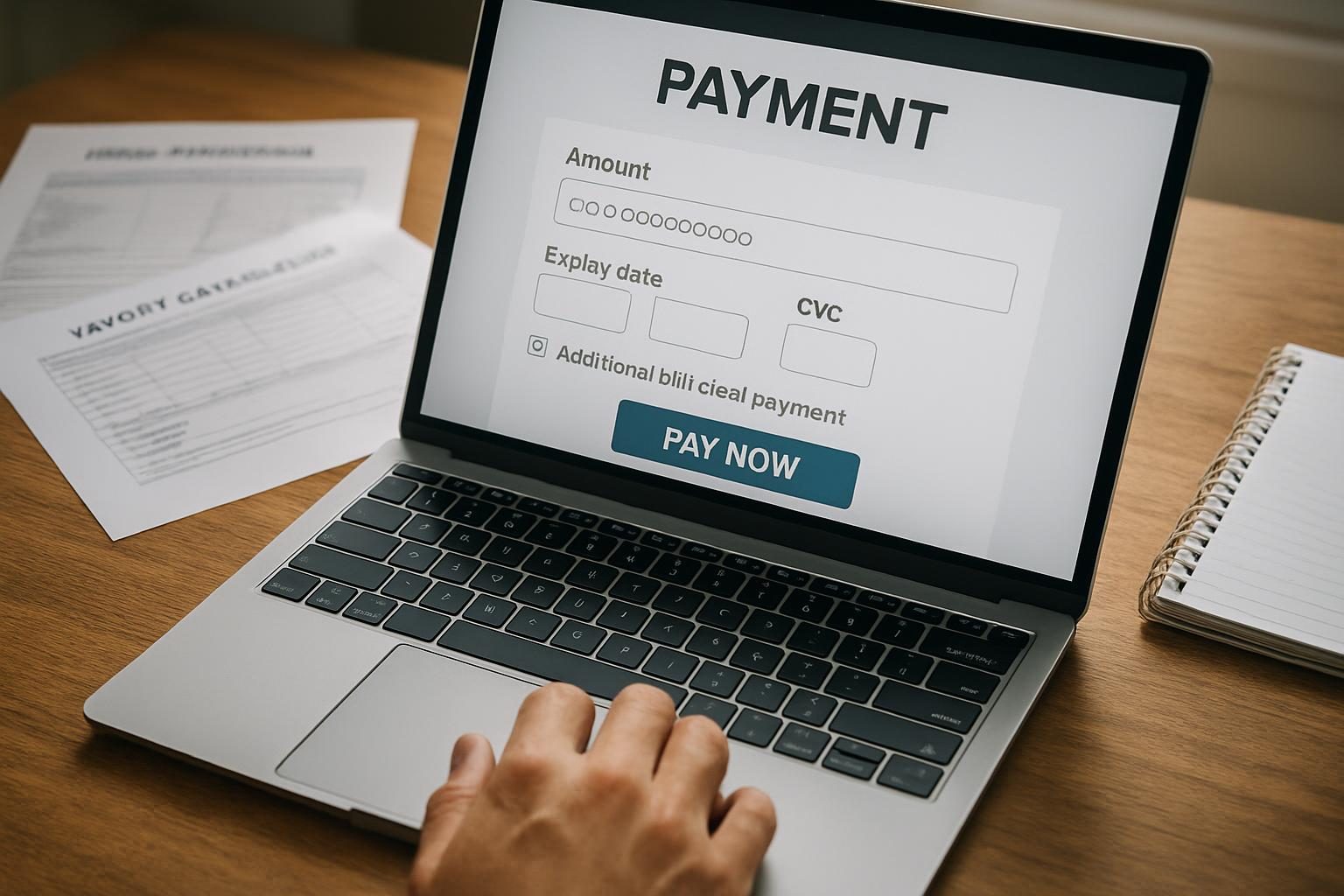
How to Make Extra Student Loan Payments, Step by Step
Servicer websites differ, but the process is nearly the same everywhere. Follow these steps the first time, then repeat the routine each month.
- Log in and list every loan. Write down each loan’s balance, interest rate, and loan ID or group number. Federal loans are often split into several lettered groups, each with its own rate.
- Find the payment page. Look for options such as “Make a payment,” “Additional payment,” or “Payment allocation.” If you can choose how extra money is applied, use it.
- Pay your regular amount first. Make (or autopay) the regular bill so you stay current.
- Submit the extra as a separate payment. A second transaction is easier to track and direct than one lump sum.
- Specify the target loan. Choose the highest-rate loan, or the specific loan you want to eliminate first.
- Add instructions. If the site has a note field or you are paying by mail or phone, state: “Apply this as an additional payment to principal, not as a prepayment of future installments.”
- Save the confirmation. Screenshot or download it in case you need to dispute how it was applied.
Pro tip: If your servicer’s site will not let you choose a loan, call or send a secure message through your account. Ask for the instruction in writing or save the chat transcript.
Target the Right Loan With Your Extra Money
If you have several loans, where the extra goes matters as much as how much you send. The math favors the highest interest rate first, because that dollar stops the most interest from accruing.
A quick example (illustrative numbers): Say you have a $10,000 loan at 7.5% and a $10,000 loan at 4.5%, and you add $100 a month. Applying it to the 7.5% loan saves more interest over time than spreading it evenly, because 7.5% is charged on every remaining dollar of that balance.
- Avalanche: Highest rate first. Cheapest in total interest. Learn the details in our debt avalanche method guide.
- Snowball: Smallest balance first. It may cost a bit more interest but can keep you motivated.
- Private before federal (often): Private loans usually lack the protections federal loans have, such as income-driven repayment, so many borrowers target them first. Weigh this against rates.
Want to compare strategies side by side? Try our student loan payoff calculator with extra payment scenarios.
An extra payment is only as good as where it lands: unlabeled money can end up prepaying a bill instead of cutting your balance.
Avoid Advancing Your Due Date by Accident
Many borrowers send extra, then notice their next bill says “$0 due” or the due date moved out a month or two. That feels like a win, but it means the money went to future installments rather than principal.
Prepaid installments do not stop interest from accruing on your full balance the way a principal payment does. Here is how to prevent it:
- Ask for principal-only application. Use the servicer’s option, or state it in your payment instructions.
- Keep autopay on at the regular amount. Do not raise autopay to cover extra unless you confirm how it is applied.
- Check the statement. After each extra payment, confirm your due date and minimum did not change unexpectedly.
- Fix mistakes quickly. If an extra payment was applied as prepayment, contact the servicer and ask them to reapply it to principal.
One more note: on some federal loans, the servicer’s “paid ahead” status can also affect how a payment is handled if you later enter deferment or forbearance. Ask your servicer to explain how their system treats extra payments.

Check That Your Extra Payment Worked
Verification takes two minutes and prevents months of wasted effort. A day or two after your payment posts, open your account and look for these signs:
- Principal balance dropped by roughly the amount of your extra payment (minus any accrued interest it covered first).
- Transaction detail shows the payment split between interest and principal.
- Next due date is unchanged, and the minimum due is not $0 unless you intended to pay ahead.
- Target loan shows the reduction, not all loans equally.
If the numbers look off, save screenshots and contact the servicer. For most federal loans, you can escalate complaints through the official Federal Student Aid website.
Two minutes checking your statement can protect months of extra payments from landing in the wrong place.
Ways to Find Extra Money for Student Loans
You do not need a windfall. Small, repeatable amounts add up, and they work best when automated.
- Round up: If your payment is $287, pay $300 every month.
- Biweekly-style splits: Pay half your payment every two weeks, which creates one extra payment per year (confirm your servicer applies each half correctly).
- Raises and tax refunds: Send a fixed share of any new income or refund to your target loan.
- Small cuts: A 30-day no-spend challenge can free up a few hundred dollars for a one-time principal payment.
- Tiny leftovers: The debt snowflake method sends odd bits of cash to debt as they appear.
For more ideas, read how to pay off student loans fast, or explore our full student loan payoff guide. If you hold private loans at a high rate, refinancing can save money or backfire, so read the tradeoffs first, since refinancing federal loans gives up federal protections.
Next up: private vs federal student loans payoff strategies.
Ready to cut your rate so extra payments go further? Request free options to lower your interest rate using the form on this page.
FAQ
Is there a penalty for paying off student loans early?
Federal student loans do not have prepayment penalties, and federal law generally prohibits them on most consumer student loans. Check your promissory note or ask your servicer to confirm, especially for older or private loans.
Should I make one big extra payment or smaller ones monthly?
Either works. Because interest accrues daily on most student loans, paying earlier saves slightly more, so smaller regular extras can beat one lump sum later. The best choice is the one you will actually keep doing.
Do extra payments lower my monthly bill?
Usually not. Extra payments typically shorten your payoff time rather than reducing the required monthly amount, unless you recast or refinance the loan.
What if my servicer will not apply extra payments the way I ask?
Request the application in writing through your online account, keep records, and escalate to a supervisor if needed. For federal loans, you can submit a complaint through StudentAid.gov if the issue is not resolved.
This article is educational, not personalized financial advice. Consider speaking with a qualified financial professional about your specific situation.
Get free options to lower your student loan rate
A partner will share free, no-obligation options so more of each extra payment goes toward principal.

