
Quick answer: In most cases, pay off private student loans first, especially ones with a variable or high interest rate, because they lack the safety nets federal loans carry. Keep your federal loans on minimum payments unless their rates are higher than your private rates, then attack whichever balance has the highest rate.
Key takeaways
- Federal loans come with income-driven plans, deferment, forbearance and possible forgiveness. Private loans generally do not.
- The default rule: rank every loan by interest rate, then send extra cash to the highest rate, whichever type it is.
- Variable-rate private loans can get more expensive over time, which pushes them up the payoff list.
- Refinancing federal loans into a private loan permanently gives up federal protections, so run the numbers first.
- Always confirm extra payments are applied to principal, not future payments.
If you owe both kinds of student debt, the question of which to attack first is really a math problem with a safety-net twist. This guide walks through how private and federal loans differ, how to rank them, and how to build a payoff order you can stick with. For the bigger picture, see our student loan payoff guide.
Want to know if a lower rate could shrink your payoff timeline? You can request free options to lower your interest rate using the form on this page.
Private vs. Federal Student Loans: What Actually Differs
Both loan types charge interest and both must be repaid. The difference is what happens when life goes sideways. Here is the short version:
- Federal loans: Set by Congress, fixed rates, access to income-driven repayment, deferment, forbearance and certain forgiveness programs.
- Private loans: Issued by banks, credit unions and online lenders. Rates are based on your credit and can be fixed or variable. Relief options are up to the lender and usually limited.
- Co-signers: Private loans often have one. If you fall behind, their credit takes the hit too.
- Discharge rules: Federal loans have defined discharge paths in cases such as death or total and permanent disability. Private lender policies vary, so read your contract.
You can check what you owe federally, and who services each loan, at StudentAid.gov. Private loans will not appear there, so pull your credit report to find them.
Protections: Why Federal Loans Are Worth Keeping Longer
Federal protections are an insurance policy. You may never use them, but they are valuable if your income drops. Before you pay one off aggressively, understand what you would be giving up.
Federal safety nets
- Income-driven repayment: Payments are tied to your income and family size. See how that math works in our guide to income-driven repayment plans.
- Deferment and forbearance: You can pause payments in qualifying situations, though interest may keep growing.
- Forgiveness programs: Programs such as Public Service Loan Forgiveness exist for qualifying borrowers. If you may qualify, paying early could waste money you would not have had to pay.
What private loans offer instead
Some lenders offer short forbearance windows or hardship programs, but they are discretionary and differ by company. If a private lender will not work with you, you have fewer options before the account becomes delinquent.
That asymmetry is the core of the priority logic. Money spent on a private loan removes a risky obligation. Money spent on a federal loan removes a flexible one.
Federal loans are a debt with a built-in safety net; private loans are a debt with a contract.
Rates and Variable-Rate Risk
Interest is the engine that makes debt grow, so the rate on each loan should drive your order. Federal loans issued for a given year carry fixed rates for life. Private loans may be fixed or variable.
- Fixed rate: The rate stays put, so your payoff math is predictable.
- Variable rate: The rate moves with a benchmark index and can rise. A loan that looks cheap today may not stay that way.
- Caps and floors: Check your promissory note for the maximum rate. Not every private loan has a meaningful cap.
A quick example, using made-up numbers: a $10,000 private loan at 9% costs about $900 a year in interest, while a $10,000 federal loan at 4.5% costs about $450. Paying the private balance first saves you roughly twice as much interest per dollar. That is the avalanche method in action, and you can learn more in our debt payoff plans guide.
Pro tip: If your variable rate has risen since you borrowed, treat it like a ticking clock. Moving it to the front of the line, or refinancing it to a lower fixed rate, can lock in your savings.
The Priority Logic: A Simple Order of Operations
Use this sequence to decide where each extra dollar goes. It works for most borrowers, and you can adjust it to your situation.
- Cover every minimum payment. Late payments hurt credit and can trigger fees on both loan types.
- Build a small starter cushion. Even one month of expenses keeps a surprise bill from landing on a credit card.
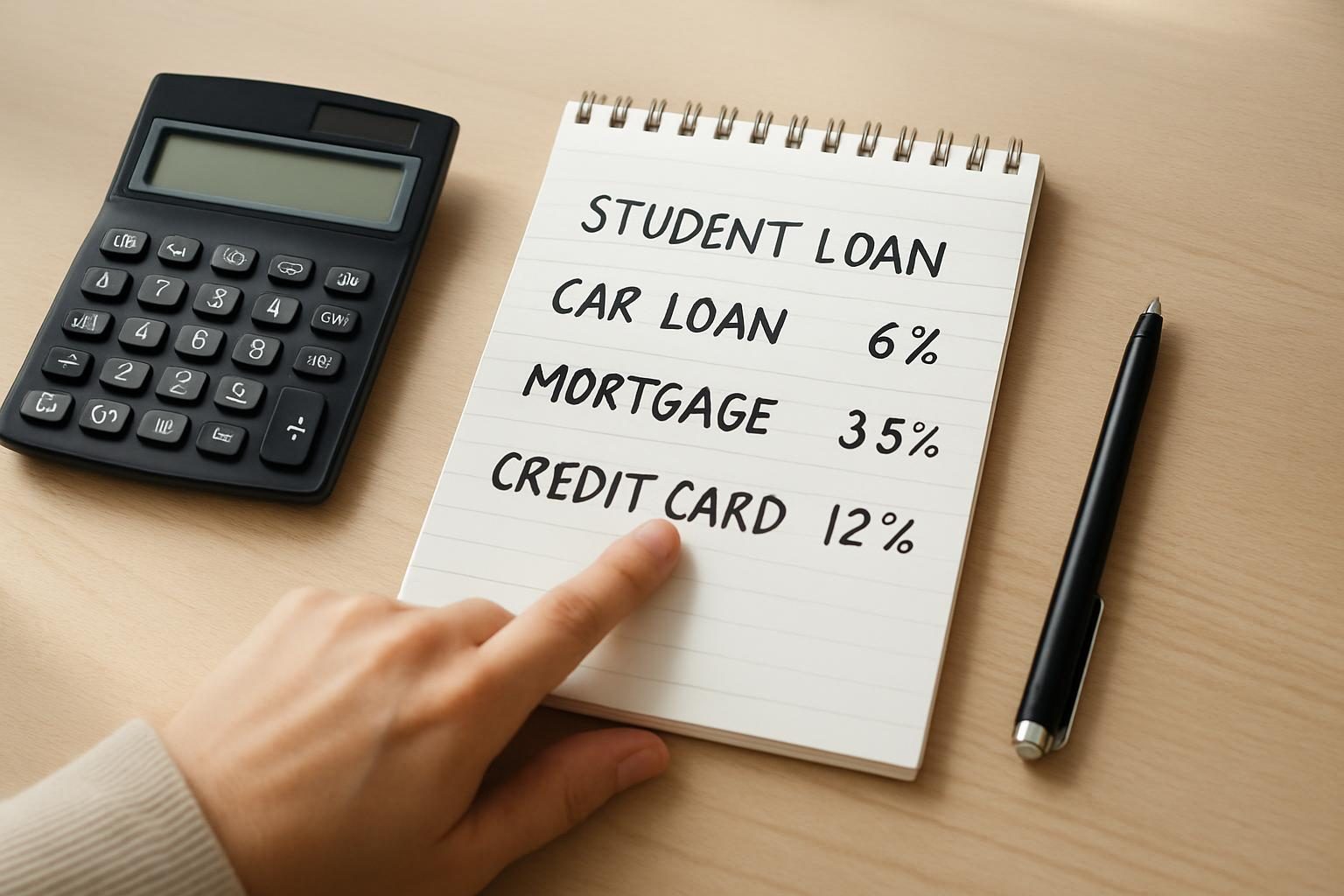
- List every loan with its balance, rate and type. Our Debt Burn-Down Calculator makes this quick.
- Target the highest rate first. If a private loan is at 10% and a federal loan is at 6%, the private loan goes first.
- Break ties with risk. If two loans have similar rates, pay the private one first because it has fewer protections.
- Roll the freed-up payment forward. When one loan is gone, add its payment to the next target.
When to flip the order
- Federal rate is higher: Graduate PLUS and some older loans can carry rates above a refinanced private loan. Go by rate in that case.
- You expect forgiveness: Hold federal loans at the required payment and send extra cash to private debt or savings.
- Your income is unstable: Keep federal loans on an affordable plan and build cash before paying anything early. Our article on whether to pay off student loans early covers this tradeoff.
Rank by interest rate first, then use protections to break the tie.
Refinancing: Powerful, But Know What You Give Up
Refinancing replaces your existing loans with a new private loan, ideally at a lower rate. For private loans, it can be a no-brainer if your credit has improved since you borrowed or if you want to swap a variable rate for a fixed one.
Refinancing federal loans is a bigger decision. Once they become private debt, you lose income-driven plans, federal deferment options and forgiveness eligibility, and you cannot reverse it. Read our breakdown of when student loan refinancing saves money and when it backfires before you decide.
- Often reasonable: Refinancing a high-rate private loan, particularly if a co-signer can be released.
- Proceed carefully: Refinancing federal loans if your job is unstable or you might qualify for forgiveness.
- Compare total cost: A lower monthly payment from a longer term can cost more in interest overall.
Make Sure Your Extra Payments Actually Work
Extra money only helps if it hits the principal. Servicers sometimes apply an overpayment to your next scheduled bill instead, which does little to cut interest.
- Contact each servicer and ask how to direct extra funds to principal on a specific loan.
- Check the next statement to confirm the balance dropped by the expected amount.
- With federal loans, specify which loan gets the extra payment, or it may be spread across all of them.
We cover the mechanics step by step in how to make extra student loan payments so they hit principal, and you can test scenarios with the student loan payoff calculator. If you are weighing forgiveness against a full payoff, watch for our upcoming piece on student loan forgiveness versus paying off your balance.
A lower rate makes every extra dollar go further. You can request free options to lower your rate from our partners using the form on this page, with no obligation.
FAQ
Should I pay off private or federal student loans first?
Usually private loans first, particularly variable-rate ones, because they have fewer protections. The exception is when a federal loan carries a higher interest rate, in which case the higher rate generally wins.
Is it smart to refinance federal loans into a private loan?
It can be if you have stable income, strong credit and a clear rate savings, but it is irreversible. You lose income-driven plans and potential forgiveness, so many borrowers keep federal loans as they are.
Can I pay off student loans early without penalty?
Federal loans have no prepayment penalty. Most private student loans do not either, but confirm in your loan agreement.
Does paying off a private loan help my credit?
Closing an installment loan can cause a small, temporary dip in some scores, but the long-term benefit of lower debt and fewer payments generally outweighs it. This is general information, so consider speaking with a qualified financial professional about your situation.
See free options to lower your student loan rate
A partner will review your loans and share free, no-obligation ways to lower your rate.

