
Quick answer: Biweekly mortgage payments can save real money, but the savings come from one thing: you end up making the equivalent of 13 monthly payments a year instead of 12. You can get the same result on your own for free, so there is rarely a reason to pay a fee-based program to do it.
Key takeaways
- Paying half your mortgage payment every two weeks adds up to 26 half-payments, which equals 13 full payments a year.
- That one extra payment goes to principal and can shave years off a 30-year loan and save tens of thousands in interest.
- You don’t need a paid enrollment program. Adding 1/12 of your payment to each monthly payment does the same math.
- Confirm that your servicer applies extra money to principal right away, not just holds it.
If you have heard that switching to biweekly mortgage payments is a clever trick for beating your lender, the truth is simpler and more useful. It is just arithmetic, and you can run it yourself with no middleman. Below is how the math works, what it is worth, and which programs to avoid.
Want to see whether a lower rate would cut your interest even further? You can request free refinancing options using the form on this page.
How Biweekly Mortgage Payments Work
A standard mortgage has 12 monthly payments a year. A biweekly plan splits your monthly payment in half and sends that half every two weeks.
- 12 months means 12 full payments.
- 52 weeks / 2 means 26 half-payments, which equals 13 full payments.
That is the whole secret. You pay one extra monthly payment per year without feeling a big squeeze, because the money leaves your account in smaller bites that often line up with your paycheck.
Not the same as semi-monthly. Paying half your payment twice a month (say, the 1st and 15th) is 24 half-payments, which is only 12 full payments. No savings. The savings only appear with true every-14-days timing, or with an equivalent extra amount.
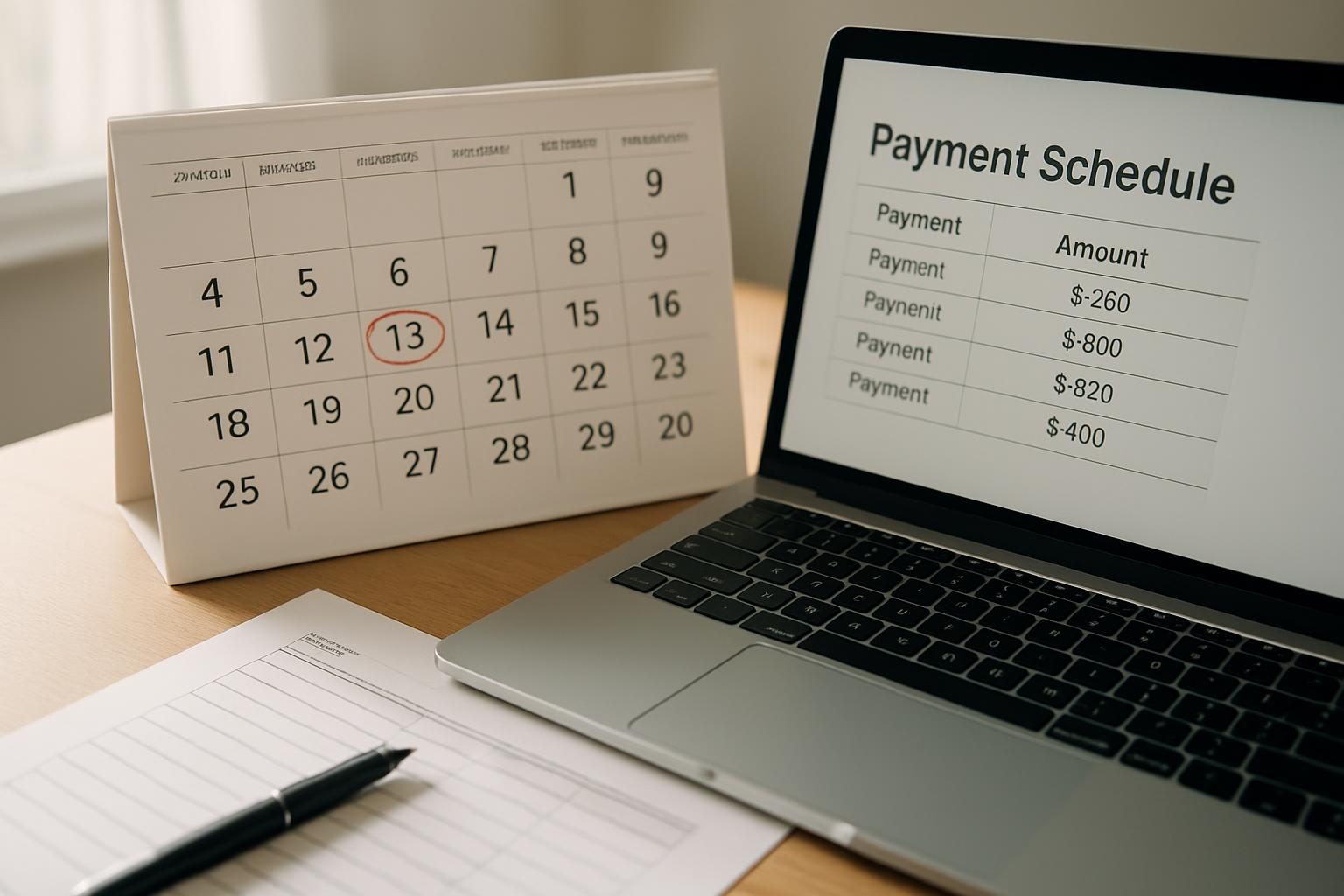
The 13th Payment Math: What It Actually Saves
Let’s run a realistic example. These figures are estimates for illustration, and your numbers will differ.
- Loan: $300,000, 30-year fixed at 6.5%
- Monthly principal and interest: about $1,896
- Extra per year with biweekly: one extra $1,896 payment, or about $158 more per month
Paying that extra $158 a month toward principal would cut roughly 4 to 5 years off the loan and save somewhere in the range of $70,000 to $90,000 in interest, depending on how early you start. Starting in year 1 matters far more than starting in year 15, because early extra principal has decades to stop compounding interest.
Lower rates mean smaller savings, and higher rates mean bigger ones. A rough rule: the longer the loan has left and the higher the rate, the more that 13th payment is worth. To plug in your own balance and rate, use the extra mortgage principal payment calculator.
Pro tip: You don’t have to split anything every two weeks. Divide your monthly payment by 12 and add that amount to every monthly payment, labeled as principal. For a $1,896 payment, that is about $158.
Biweekly payments aren’t magic. They are just one extra mortgage payment a year in disguise.
Biweekly Mortgage Payments vs. Extra Monthly Principal
Because the savings come from the extra payment, you have options that produce the same result:
- True biweekly plan from your lender. Some servicers offer it free. Payments are drafted every 14 days.
- Monthly payment plus 1/12 extra. Simple, flexible, and works with any servicer.
- One lump extra payment a year. Use a tax refund or bonus. Same total, fewer moving parts.
- Round up. Rounding $1,896 to $2,050, for example, gets you most of the way there.
The biggest difference is timing. Paying every two weeks reduces your balance slightly sooner, but the extra interest saved by that timing is small compared with the 13th payment itself. So don’t stress over the schedule. Focus on the extra principal amount. For a side-by-side look at other methods, see 7 strategies for paying off your mortgage early and our mortgage payoff guide.

Fee-Based Biweekly Programs to Avoid
Here is where people lose money. Some third-party companies pitch a biweekly service as a special program and charge for it. Common versions include:
- Setup fees, often in the range of a few hundred dollars (estimate; varies by company).
- Per-transaction or monthly fees that quietly eat the interest you save.
- Holding your money in an account and sending your lender a single payment once a month, which means you get no biweekly benefit at all until the company releases the funds.
The key red flag: they are selling you a service you can replicate for free. Before you enroll in anything, check these points:
- Does your servicer already offer biweekly drafts at no charge?
- Is the company your actual loan servicer, or an outside party?
- What is the total fee over the life of the program?
- Is the extra applied to principal immediately?
For consumer protection guidance, the Consumer Financial Protection Bureau’s homebuyer resources explain how mortgage servicing works.
If a company charges you a fee to pay your own mortgage faster, you are paying for math you can do alone.
Check Before You Start
Before sending extra money, do three quick checks so it actually works:
- Look for prepayment penalties. Most modern mortgages don’t have them, but read your note or ask your servicer.
- Confirm principal-only application. Extra funds should reduce principal, not sit as an early payment of next month’s bill. Many servicers have a separate line for it.
- Keep your emergency fund intact. Extra payments are hard to pull back out. Don’t starve your cash cushion to prepay a mortgage.
Also compare your mortgage rate to other debts. If you carry credit card or other high-interest balances, those almost always deserve extra dollars first. Our rule-of-thumb guide on paying off debt versus investing walks through the logic, and our debt payoff plans guide helps you rank everything in order. If you are weighing a mortgage against investing, a future piece on whether to pay off your mortgage or invest will go deeper.
You can also model different extra amounts with the Debt Burn-Down Calculator, then compare the interest saved against what a lower rate could do. Another approach is simply to request free options to lower your rate using the form on this page.
Frequently Asked Questions
Do biweekly mortgage payments really save money?
Yes, because they add one extra monthly payment per year that goes toward principal. The savings are real, but they come from the extra payment, not from the biweekly schedule itself. You can match the result with a small monthly add-on.
How much faster will I pay off my mortgage?
On a typical 30-year loan, one extra payment a year often cuts roughly 4 to 6 years off the term, depending on your rate and how early you start. Use a calculator with your own balance and rate for a firm figure.
Should I pay a company to set up biweekly payments?
Generally no. Fees can erase your savings, and some programs delay sending your money to the lender. If your servicer offers a free biweekly option, use that. Otherwise, just add 1/12 of your payment each month.
Is it better to pay extra or refinance?
It depends on your rate, closing costs, and how long you plan to stay. Sometimes a lower rate saves more than extra principal. You can also do both. Compare your options before deciding, and consider talking with a qualified housing counselor or financial professional.
See free options to lower your mortgage rate
A partner will share free, no-obligation options so you can compare rates and see how much interest you could save.

