
Quick answer: To pay off student loans fast, send every extra dollar to the principal of your highest-rate loan, keep minimums on the rest, and lower your rate wherever you can through autopay discounts or refinancing. Add windfalls, side income and employer repayment help to shorten the timeline. If you’re pursuing federal forgiveness like PSLF, think twice before refinancing, because private refinancing ends federal benefits.
Key takeaways
- Extra payments only work if they are applied to principal, not future interest or next month’s bill.
- The avalanche method (highest rate first) saves the most interest across multiple loans.
- Cutting your rate by even 1 percentage point can save thousands on a large balance.
- Refinancing federal loans into a private loan permanently forfeits federal protections and PSLF eligibility.
Student debt feels slow because interest quietly eats a big share of every early payment. The good news: it’s also very beatable with simple math. Below are nine moves, ordered roughly from easiest to most strategic, so you can stack the ones that fit your situation.
Want to see what a lower rate could do to your timeline? Request free student loan refinance options using the form on this page.
Why Student Loans Cost So Much: The Math First
Interest accrues on your balance every day, and each payment first covers that interest before touching principal. On a $40,000 balance at 6.5%, interest runs roughly $7 a day (an estimate). Early in repayment, a large slice of your payment goes to interest alone.
That is why two levers matter most:
- Pay principal down sooner. Every dollar of principal you remove stops generating interest for the rest of the loan.
- Lower the rate. A lower rate means more of every payment attacks the balance.
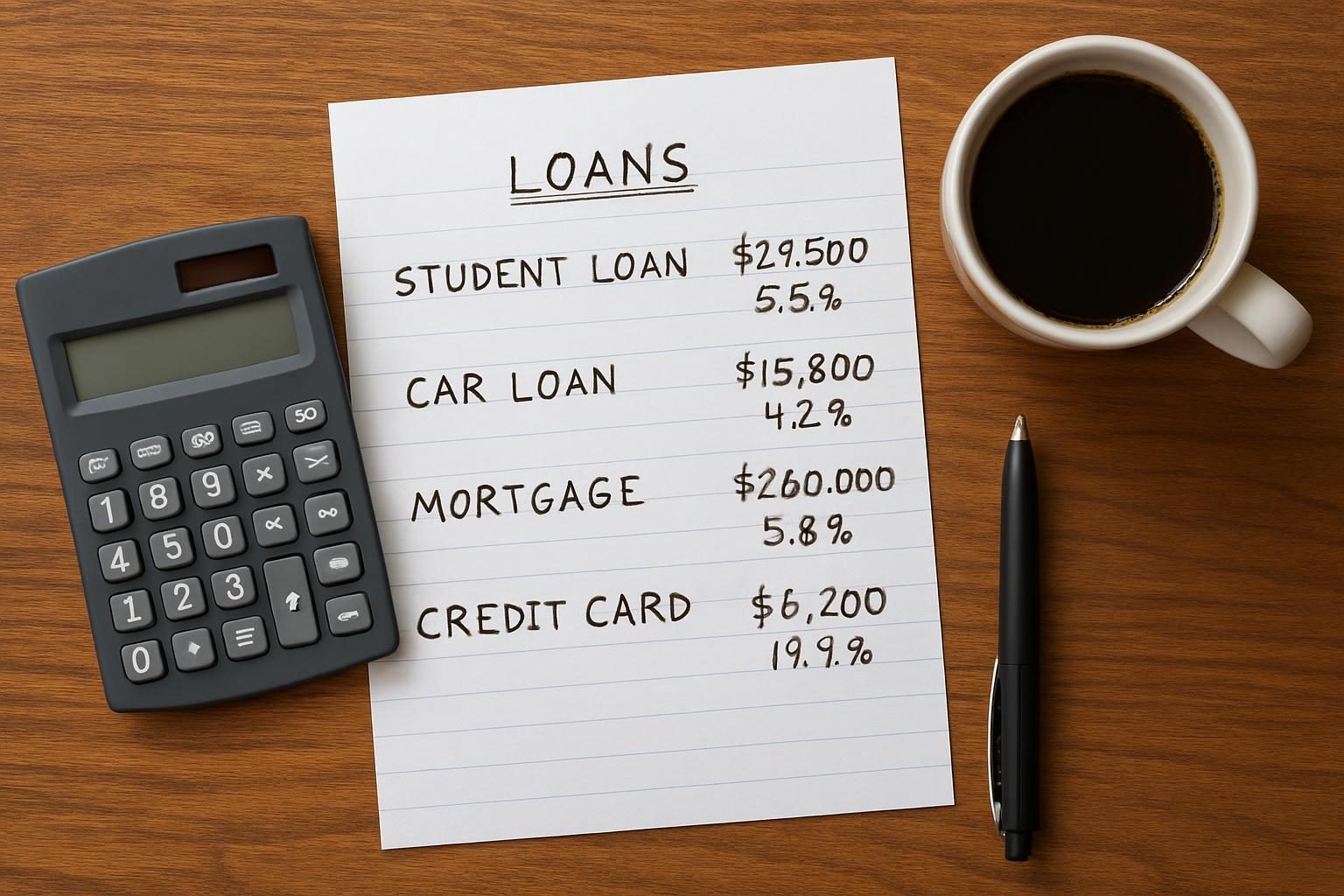
Before anything else, list every loan with its balance, rate, servicer and minimum payment. Our free Debt Burn-Down Calculator can turn that list into a payoff date and show how extra payments change it.
Move 1: Make Extra Payments Go to Principal
Many servicers apply extra money to the next bill or to accrued interest by default. You often have to tell them otherwise.
- Log in to your servicer’s portal or call the number on your statement.
- Choose the option to apply the extra amount to principal on a specific loan.
- Confirm on your next statement that the principal balance dropped by the amount you sent.
Even $50 to $100 a month extra can cut years off a standard 10-year plan, depending on your balance and rate. Run your own numbers before assuming a timeline.
Move 2: Use the Avalanche Across Your Loans
If you have several loans, pay minimums on all of them and direct every extra dollar to the one with the highest interest rate. When it’s gone, roll its full payment into the next-highest rate. This is the debt avalanche, and it minimizes total interest.
- Federal and private mix: Private loans often carry variable or higher rates, so they frequently go first.
- Same-rate loans: Target the smaller balance to free up a payment sooner.
- Need motivation? The snowball (smallest balance first) costs a bit more interest but delivers faster wins.
For the full walkthrough, see our debt avalanche method guide, or compare approaches in the debt payoff plans guide.
Every extra dollar sent to principal is a dollar that never pays interest again.
Move 3: Grab the Autopay Discount
Many federal servicers and most private lenders offer a small rate reduction, commonly 0.25 percentage points, when you enroll in automatic payments. Confirm the current terms with your servicer or lender.
It’s not huge, but it’s free money. On a $30,000 balance, a quarter-point cut saves a modest but real amount over the loan’s life. Autopay also protects you from late fees and missed payments.
Pro tip: Keep your autopay at the minimum, then make a separate manual extra payment each month. That way a tight month never triggers a missed payment or loses your discount.

Move 4: Refinance Student Loans When It Makes Sense
Refinancing replaces your existing loans with a new private loan, ideally at a lower rate. Lenders typically look at credit score, income, debt-to-income ratio and employment history. Rates you’re offered will vary by borrower, so compare multiple offers rather than guessing.
Pros
- A lower rate can cut total interest and shorten your payoff date.
- You can combine several loans into one payment.
- You may be able to remove or release a cosigner after qualifying on your own.
Cons
- Refinancing federal loans into a private loan means losing federal protections: income-driven repayment, deferment and forbearance options, and eligibility for forgiveness programs.
- A shorter term raises your monthly payment.
- A variable rate can rise later.
Planning to explore this? Our upcoming guide on how student loan refinancing works will break it down further. In the meantime, you can compare student loan refinance rates from partners with no obligation.
Move 5: Protect PSLF Before You Refinance
Public Service Loan Forgiveness (PSLF) can forgive the remaining federal Direct Loan balance after 120 qualifying payments while working full time for a qualifying government or nonprofit employer. If that’s you, refinancing into a private loan ends your eligibility for those loans.
- Check your employer’s eligibility and your payment count on the official Federal Student Aid PSLF page.
- If you’re on track for forgiveness, paying extra can actually reduce what gets forgiven. Run the numbers first.
- If forgiveness is unlikely, aggressive payoff and refinancing may come out ahead.
If you’re weighing both paths, our planned guide on student loan forgiveness vs. payoff will help you compare them.
Refinancing federal loans into private ones is a one-way door: you can’t get federal benefits back.
Move 6: Tap Employer Student Loan Assistance
Some employers contribute directly to employees’ student loans. Under current federal tax rules, employers can generally provide up to $5,250 per year in tax-free educational assistance, which may include loan repayment. This provision has had expiration dates in the past, so verify its status with your HR team or a tax professional.
- Ask HR whether a student loan repayment benefit exists, even if it’s not advertised.
- Find out whether payments go to the servicer directly and whether there’s a vesting period.
- Treat every employer dollar as extra principal if your minimums are already covered.
Move 7: Feed Windfalls and Raises Straight to Loans
Tax refunds, bonuses, gifts and raises are the fastest way to speed up payoff because you never built them into your budget.
- Refunds and bonuses: Send a set percentage, such as half, to the highest-rate loan.
- Raises: Redirect the first 50% of any raise before lifestyle creep absorbs it.
- Side income: Dedicate one gig, such as freelance work or weekend shifts, entirely to loans.
If you need a spending reset to free up cash, try one of our debt payoff challenges.
Move 8: Try Biweekly Payments and Round Up
Paying half your monthly payment every two weeks gives you 26 half-payments, or 13 full payments a year, instead of 12. Make sure your servicer applies the extra to principal.
Rounding up works the same way: if your payment is $283, pay $300. The difference is small month to month and meaningful over years.
Move 9: Track Progress and Re-Run the Math
Check your balances monthly. Watching principal fall is motivating, and it tells you when to shift extra dollars to the next loan. Revisit refinancing if your credit score or income improves, since better qualifications can mean a better offer later.
Need a broader system beyond student loans? Our step-by-step burn-down plan shows how to combine all of your debts, and the student loan payoff guide goes deeper on loan-specific strategy.
Ready to see if a lower rate could speed things up? Request free refinance options using the form on this page, and compare offers before deciding.
Frequently Asked Questions
What’s the fastest way to pay off student loans?
Combine a lower interest rate with the largest extra principal payments you can sustain. Avalanche your loans, use windfalls, and consider refinancing if you don’t need federal protections.
Should I refinance my federal student loans?
Only if you’re confident you won’t need income-driven repayment, deferment, forbearance or forgiveness like PSLF. Private refinancing permanently removes those federal benefits. A qualified financial professional can help you decide.
Is it better to pay extra on the highest balance or the highest rate?
Mathematically, the highest rate. That’s the avalanche method, and it saves the most interest. The smallest-balance-first snowball can be a fine choice if you need quick wins to stay motivated.
Can I pay off student loans early without penalty?
Federal student loans have no prepayment penalty, and most private lenders don’t charge one either. Check your loan agreement to be sure.
This article is educational and not financial, tax or legal advice. Rates, terms and program rules change, so confirm details with your servicer, lender or a qualified professional.
Compare free student loan refinance rates
Partners will share free, no-obligation options to help lower your student loan interest rate.

