
Quick answer: To make a debt payoff plan, list every debt with its balance, APR and minimum payment, find extra dollars in your budget, pick a payoff order (snowball or avalanche), automate the payments and set a review date. You can finish all six steps in a single evening with a pen, a calculator and your latest statements.
Key takeaways
- A plan is just a list, a number and an order. You do not need fancy software.
- Every extra dollar you find goes to one target debt while the rest get minimums.
- Avalanche saves the most interest; snowball builds momentum faster. Either beats no plan.
- Automation and a review date keep the plan alive after tonight.
Most people put off a payoff plan because it feels like a weekend project. It is not. The math is simple, and the hardest part is looking at the numbers once. Block out two or three hours, pour a drink, and let’s get it done.
Want to see if a lower rate could shorten your plan before you start? You can request free options to lower your interest rate using the form on this page.
Your One-Evening Debt Payoff Checklist
Here is the whole plan at a glance. Each step below is built to take 15 to 40 minutes.
- Gather statements for every debt.
- List balances, APRs and minimums in one place.
- Find your extra dollars from the budget.
- Pick a method: snowball or avalanche.
- Automate payments so the plan runs itself.
- Set a review date to adjust and celebrate.
Need the longer version with more detail on each method? Our debt payoff plans guide covers the full playbook.
Step 1: Gather Every Statement
You cannot plan around debts you have not looked at. Log in to each account or dig out the latest paper statement. Do not rely on memory.
Collect statements for:
- Credit cards (including store cards)
- Student loans (federal and private, each loan separately)
- Auto loans and personal loans
- Mortgage or HELOC, if you want them in the plan
- Buy now, pay later balances and medical bills on payment plans
- Money owed to family or tax debt with a payment schedule
Not sure where all your accounts are? You can pull free credit reports from the three bureaus at AnnualCreditReport.com, the official federal-authorized site. It is a handy way to catch a forgotten account.

Step 2: List Balances, APRs and Minimums
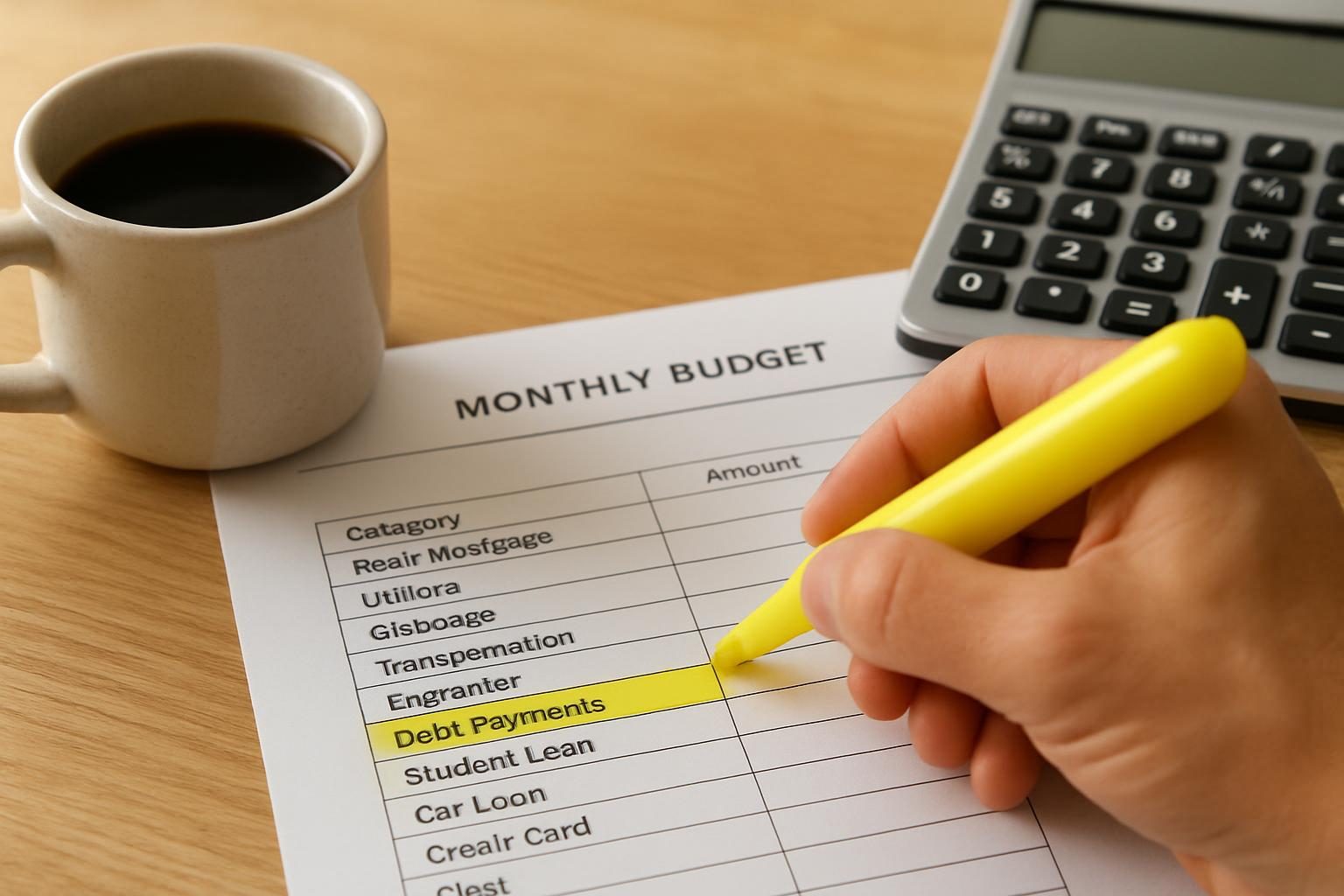
Now put everything on one page. Make five columns: debt name, current balance, APR (interest rate), minimum payment and due date. A notebook page works. So does a spreadsheet or our printable debt snowball worksheet.
Here is a sample of what yours might look like (made-up numbers for illustration):
- Store card: $900 balance, 29.99% APR, $35 minimum
- Credit card: $4,200 balance, 24.99% APR, $105 minimum
- Car loan: $11,500 balance, 7.5% APR, $340 minimum
- Student loan: $18,000 balance, 5.5% APR, $190 minimum
Add up the balances and the minimums. In this example that is $34,600 owed and $670 in required monthly payments. Those two totals are your starting line.
Pro tip: Use the APR printed on your statement, not the “purchase rate” in your head. Cards often have a higher penalty or cash advance rate, and promo balances may expire into a much higher rate.
Step 3: Find Your Extra Dollars
Minimums alone keep you in debt for years. Your plan only gets fast when you add an extra amount on top. This is the number that matters most.
Look for extra dollars in three places:
- Spending cuts: Scan the last two or three months of bank and card activity. Subscriptions, delivery apps and unused memberships are common leaks.
- Income boosts: A few hours of overtime, a sold item or a side gig can add $100 to $400 a month. These are estimates and vary widely.
- Freed-up payments: When a debt is paid off, its old minimum rolls into the next target.
Even $50 extra a month matters. Small starts are fine because the plan grows as debts disappear. If a short burst of savings would help, try a 30-day no-spend challenge to jump-start your extra payment.
Minimum payments keep the lender happy. Extra dollars are what actually make you debt-free.
Step 4: Pick a Method to Make Your Debt Payoff Plan Work
Now choose which debt gets your extra money first. Everything else gets its minimum only. There are two popular orders.
Debt snowball: smallest balance first
Order debts from smallest to largest balance. Knock out the small one, then roll its payment into the next. The wins come early, which helps many people stay motivated. See the free debt snowball spreadsheet to set it up.
Debt avalanche: highest APR first
Order debts from highest to lowest interest rate. This costs the least in total interest, and the math favors it. Details are in our debt avalanche method guide.
How to choose:
- Pick avalanche if rates vary a lot and you are driven by the numbers.
- Pick snowball if you need quick wins to stay on track.
- If your smallest balance also has the highest APR, the two methods give the same order.
Run both orders through the debt payoff calculator to see your debt-free date under each. The difference is often smaller than people expect, so choose the one you will actually stick with.
Step 5: Automate the Plan
Willpower fades. Automation does not. Set it up once and the plan runs in the background.
- Autopay every minimum so you never miss a due date or trigger a late fee.
- Schedule the extra payment to your target debt right after payday.
- Align due dates if possible. Most lenders let you move the date to match your pay schedule.
- Keep a small buffer in checking, even $200 to $500, so an autopay never overdraws the account.
Also set up a simple way to see progress. A printable debt payoff tracker on the fridge makes each payment feel like it counts.
A plan you have to remember every month will fail. A plan on autopay will not.
Step 6: Set a Review Date
Put a recurring reminder on your calendar before you close the notebook. A monthly check takes ten minutes. A deeper review every three months keeps you honest.
At each review, ask:
- Did every payment go through?
- Did a balance hit zero? If so, roll that payment forward.
- Did income or expenses change? Adjust the extra amount.
- Could a lower rate speed things up?
That last question is worth exploring. A 0% balance transfer or a consolidation loan can cut interest on high-rate cards, though fees and approval depend on your credit. Student, auto and mortgage refinancing may also help if rates have dropped or your credit has improved. Compare the total cost before you commit.
What to Do After Tonight
You now have a real plan. Keep momentum with these next moves:
- Read how to pay off debt fast with the burn-down plan for ways to accelerate.
- Model your payoff with the Debt Burn-Down Calculator.
- Struggling to stay motivated? Our upcoming article on how to stay motivated paying off debt is a good next read.
Ready to see if a lower rate could shave months off your plan? Request free options to lower your interest rate with the form on this page. It is free and carries no obligation.
FAQ
How long does it take to make a debt payoff plan?
Most people can finish in two to three hours. Gathering statements takes the longest. Once the numbers are on one page, choosing a method and setting up autopay goes quickly.
Should I save an emergency fund before paying off debt?
Many people build a small starter cushion first, often a few hundred to one thousand dollars (an estimate, not a rule). It keeps a surprise car repair from landing on a credit card. A qualified financial professional can help you size it for your situation.
Do I include my mortgage in the plan?
You can, but most people tackle higher-rate debt like credit cards and personal loans first. Mortgages usually carry lower rates and longer terms. See our mortgage payoff guide for when early payments make sense.
What if I miss a payment or my income changes?
Keep paying minimums on everything first, then trim the extra amount until things stabilize. Contact your lender early if you think you will miss a payment, since many offer hardship options. Then update your plan at your next review date.
See free options to lower your interest rate
Our partners will share free, no-obligation options like balance transfers, consolidation loans or refinancing for you to compare.


