
Quick answer: To pay off several buy now, pay later (BNPL) plans, list every plan with its balance, remaining installments, due dates and autopay source, then pay minimums on all of them and send every spare dollar to the smallest balance first (the snowball). Because most BNPL plans are short and often interest-free, the real danger is cash-flow collisions, so your schedule matters as much as your payoff order.
Key takeaways
- BNPL debt hides in several apps, so start with a full inventory before you pay a dollar extra.
- Due-date clustering, not interest, is what usually causes missed payments and overdraft fees.
- Snowball ordering fits BNPL well because small balances disappear fast and free up cash.
- Stop opening new plans while you pay down the old ones, or the math never improves.
A buy now pay later payoff plan is simpler than a credit card plan in one way: every BNPL purchase has a built-in end date. It is harder in another way: four apps can pull money on four different days, and a single bad week can snowball into overdrafts and late fees. This guide walks you through building the plan in one sitting.
If you want a second set of eyes on your options while you work, you can request free help lowering your interest rate using the form on this page.
Step 1: Inventory every BNPL account
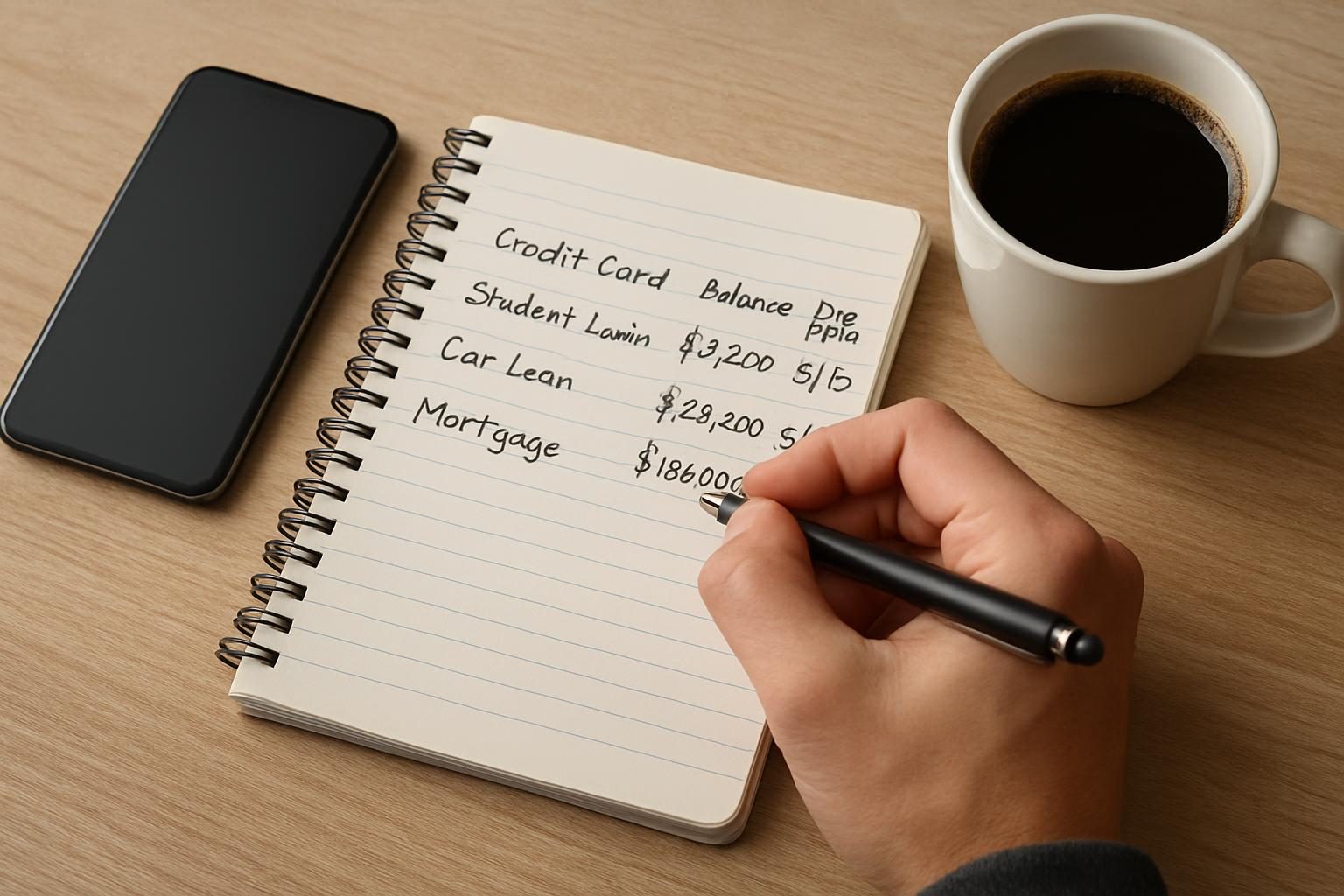
You cannot pay off what you cannot see. Open every BNPL app you have ever used (Klarna, Afterpay, Affirm, PayPal Pay in 4, Zip, Sezzle and any store-branded option) and check your email for “your payment is due” notices. Also scan your bank and card statements for recurring small debits.
For each plan, write down:
- Merchant and item: so you remember what the plan is for.
- Remaining balance: what you still owe, not the original price.
- Installments left: and the amount of each one.
- Next due date and every date after it.
- Payment source: which debit card, credit card or bank account is attached.
- Autopay status: on or off.
- APR or fees: many pay-in-4 plans carry no interest, but longer monthly plans (such as some Affirm or Klarna financing offers) can.
Our placeholder
Our guide on getting out of the pay-in-4 trap goes deeper on how these small plans stack up, and the BNPL and other debt guide covers the wider category.
Step 2: Map due dates and fix your autopay
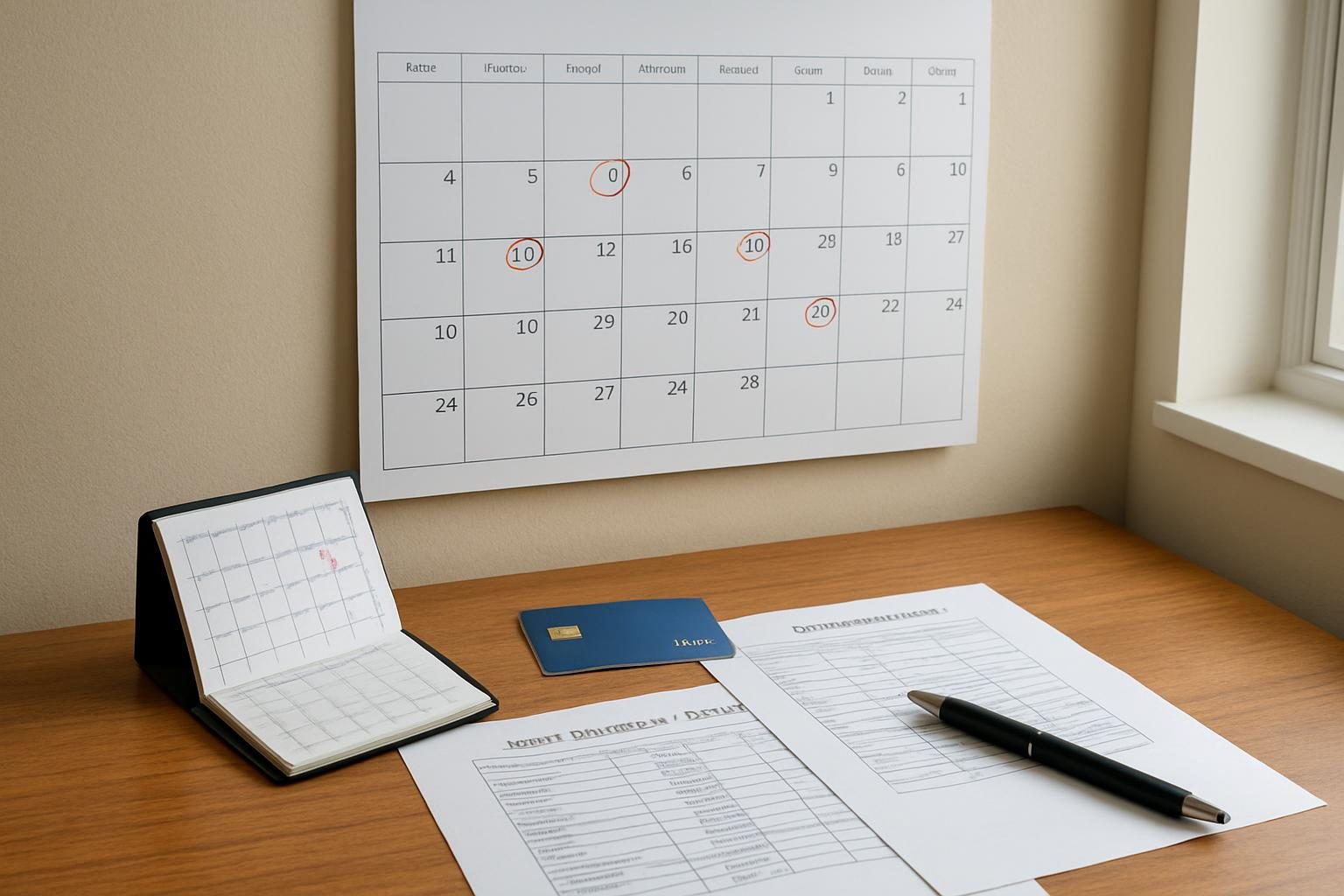
Now put every payment on one calendar. Write each due date next to the amount, then total up each week. You will often find that three or four payments land within the same few days, usually right after payday or right before the next one.
Check these autopay issues:
- Funding source: Many plans default to a debit card. Make sure that account will actually hold the money on the due date.
- Credit card autopay: Paying BNPL with a credit card can turn a 0% plan into a card balance that accrues interest if you do not pay the card in full.
- Keep autopay on for minimums. A missed payment can trigger late fees and, with some providers, restrict future use or be reported. See what happens if you miss a BNPL payment for the typical rules.
- Moving dates: Some apps let you shift a due date. Use that to spread payments out, but check for fees first.
Pro tip: Open a separate checking account just for BNPL payments. Transfer in the total due each payday and let autopay pull from it, so the payments never compete with rent or groceries.
With BNPL, the due-date calendar is your real interest rate: miss it and fees do the damage.
Step 3: Use snowball ordering for your BNPL payoff plan
With most BNPL plans at 0% interest, the avalanche method (highest rate first) has little to optimize. Snowball ordering, smallest balance first, wins on momentum and cash flow. Each plan you close removes a future debit and frees money for the next one.
- Sort plans by remaining balance, smallest to largest.
- Pay the scheduled amount on every plan. Never skip a minimum.
- Send all extra cash to the smallest plan. Check whether the app lets you pay early without a fee (most pay-in-4 plans do).
- When it hits zero, roll its payment into the next smallest.
- Exception: if one plan charges interest or a fee, move it up the list.
You can run your own numbers with the Debt Burn-Down Calculator, or fill in the printable debt snowball worksheet. If you want a quick refresher on the method, see the debt snowball calculator page.
Sample schedule: four BNPL plans, one payoff order
Here is a made-up example (illustrative numbers only). Suppose you have four active plans and can put an extra $60 per payday toward them, paid every two weeks.
- Plan A (sneakers): $45 left, 1 installment of $45 on the 3rd.
- Plan B (headphones): $90 left, 2 installments of $45 on the 7th and 21st.
- Plan C (furniture): $240 left, 4 installments of $60 on the 10th, 24th, then two more.
- Plan D (laptop bag via monthly financing): $420 left, 6 payments of $70 on the 15th.
Snowball order is A, B, C, D. Here is how the first two months could look:
- Week 1: Pay Plan A’s final $45 on the 3rd. Plan A is closed. Use the $60 extra on Plan B and pay it down to $30 remaining before its next due date.
- Week 2: Pay Plan B’s installment on the 7th. Plan C’s installment of $60 posts on the 10th. Plan D’s $70 posts on the 15th.
- Week 3: Plan B’s last installment is already covered, so it closes by the 21st. Redirect the freed $45 plus your $60 extra to Plan C.
- Week 4 and beyond: Plan C gets $105+ per payday, finishing in about three more weeks. Then all of that cash flows into Plan D’s balance.
In this example, three of the four plans are gone in roughly six to eight weeks, and Plan D finishes months earlier than its original six-month term. Your numbers will differ, but the pattern holds: small plans close first, freeing payments for the rest.
Every plan you close removes a future debit and hands that cash to the next balance.
Step 4: Stop the stack and fund the plan
A payoff plan fails if new BNPL purchases keep arriving. Delete saved BNPL options at checkout, remove the apps from your phone if you must, and set a rule: no new plan until the old ones are gone.
To find extra cash:
- Run a short spending freeze. A debt payoff challenge can turn it into a game.
- Sell unused items, especially anything you bought on a BNPL plan and no longer use.
- Redirect small windfalls, like a refund or a bonus, to the smallest plan.
- Trim subscriptions for a month or two.
If the amounts are tight, see paying off debt on a tight income. For a broader approach to every balance you owe, use the debt payoff plans guide. For a specific provider, our Klarna payment plan payoff guide has more detail. Curious how all this affects your score? See how BNPL can affect your credit score.
Step 5: Track progress and know your fallback
Keep a simple tracker so you can see balances dropping. A printable payoff tracker or a basic spreadsheet is enough; you do not need an app. Update it every payday and cross off each plan as it closes.
If BNPL is just one piece of a bigger pile, such as credit cards charging 20%+ interest, you may do better by lowering your rate overall. Options include a 0% balance transfer card or a consolidation loan, which can sometimes roll several balances into one payment. Approval and rates depend on your credit, and fees apply, so compare the math first. Read the balance transfer guide to see how the costs work.
If you would like to see which lower-rate options you might qualify for, request free, no-obligation rate options with the form on this page. This is general education, not personalized financial advice; a nonprofit credit counselor can also help if you feel overwhelmed.
FAQ
Should I pay off BNPL before credit cards?
It depends on interest. A credit card at 22% APR costs more each month than a 0% BNPL plan. But BNPL plans have fixed due dates and late fees, so keep all minimums current, then aim extra cash at the highest-cost debt or the smallest balance, whichever fits your method.
Can I pay off a BNPL plan early?
Most providers let you pay the remaining balance early, and many pay-in-4 plans charge no prepayment fee. Check the terms in the app first. Paying early on a 0% plan saves no interest, so do it mainly to simplify your schedule.
What if I cannot afford all the payments this month?
Contact the provider before the due date. Some offer to reschedule or adjust a payment, though policies vary. Prioritize essentials like housing and food, and avoid covering BNPL by overdrafting your account.
Does paying off BNPL help my credit?
It depends on the provider. Some plans are not reported to the major credit bureaus, while others may be, especially longer financing. Reporting practices are changing, so check your provider’s current policy. Paying on time protects you either way.
See free options to lower your interest rate
We’ll show you no-obligation rate options from partners, such as balance transfers or consolidation loans, at no cost to you.


