
Quick answer: A pantry challenge means eating from the food you already own for a set stretch, usually two to four weeks, and spending little or nothing at the grocery store. The money you would have spent becomes an extra debt payment. Track the savings in writing so the number stays real and actually reaches your balance.
Key takeaways
- Inventory first: you cannot cook from a pantry you have not looked at.
- Set a grocery budget for the challenge, even if it is just $0 to $20 a week for fresh items.
- Move the savings to your debt the same week, not “later.”
- Every $100 saved on a 22% APR card also stops roughly $22 a year in interest from piling up.
- A pantry challenge is a short sprint, not a forever diet.
The math behind this is simple. Groceries are one of the few budget lines you can shrink fast without cancelling a contract or calling anyone. If you already have food in the cupboards and freezer, you are sitting on cash you spent weeks ago. This guide shows you how to use it.
Want to see whether a lower rate could make every extra dollar work harder? You can request free options to lower your interest rate using the form on this page.
What a Pantry Challenge Is (and Why It Works for Debt)
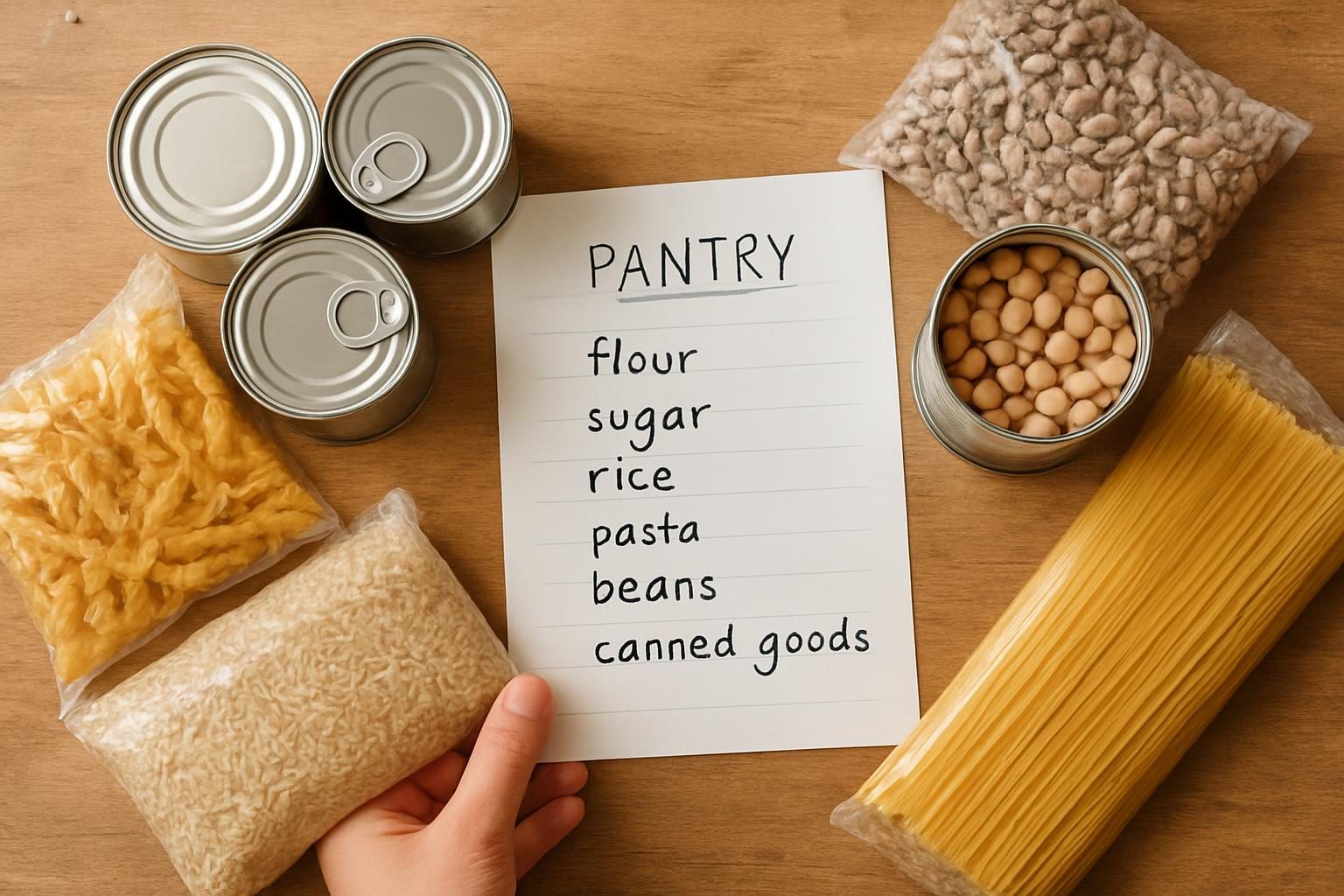
The idea is to eat down your stockpile: canned goods, pasta, rice, frozen meat, freezer vegetables, half-used bags of flour and that jar of something you bought for one recipe. You only buy the essentials you truly run out of, like milk or fresh produce, within a small cap.
It works for debt because it creates a clear, measurable gap between what you normally spend and what you spend during the challenge. That gap is your payoff fuel.
- Fast: savings show up in the first week.
- Flexible: you pick the length and the strictness.
- Low risk: you are using food you already paid for, so nothing goes to waste.
It also pairs well with other short sprints. If you like the idea, browse our list of money saving challenges that free up cash for debt, or see the full set on our debt payoff challenges page.
How to Run a Pantry Challenge, Step by Step
- Pick your length. Two weeks is a good first try. Four weeks gives bigger savings but takes more planning.
- Take inventory. Write down everything in your pantry, fridge and freezer. Check the backs of shelves and the bottom of the chest freezer.
- Set your rules. Decide what counts as an allowed purchase. Most people allow fresh basics like milk, eggs, bananas and lettuce, capped at a weekly dollar amount.
- Estimate your normal spend. Look at the last two or three months of grocery charges and find your weekly average. That is your baseline.
- Plan meals around what expires first. Use fresh and frozen items before shelf-stable ones.
- Start the clock and track every purchase. Even a $3 gallon of milk goes on the list.
- Send the savings to debt weekly. Do not let it sit in checking where it will quietly get spent.
Pro tip: Make the debt payment the same day you would normally have done your big shop. The habit is already in your calendar, so you only change where the money goes.
Good ground rules to keep it sane
- Allow yourself a small weekly fresh-food budget instead of going to zero.
- Skip the guilt over one or two takeout nights if you plan for them.
- If you hit a real shortage (diapers, medication, pet food), buy it. This is a tool, not a punishment.
- Do not stock up on “deals” during the challenge. That defeats the purpose.
The food you already bought is money you already spent. Eating it down turns it back into payoff fuel.
Pantry Challenge Meal Ideas That Use Staples
You do not need fancy recipes. You need a handful of flexible formulas that turn staples into full meals.
- Pasta night: pasta, canned tomatoes, garlic, any frozen vegetable, and a sprinkle of cheese from the fridge.
- Rice and beans bowls: rice, canned or dried beans, salsa, and whatever veggies or eggs you have.
- Soup or chili: canned beans and tomatoes, broth or water with seasoning, plus frozen meat or extra vegetables. Freeze leftovers.
- Breakfast for dinner: eggs, pancakes from pantry flour, oatmeal, or toast with peanut butter.
- Stir-fry or fried rice: day-old rice, frozen mixed vegetables, an egg, and soy sauce.
- Quesadillas and wraps: tortillas, canned beans, shredded cheese, and any leftover protein.
- Baked potato bar: potatoes topped with canned chili, steamed broccoli, or cheese.
- Tuna or chickpea salad sandwiches: canned protein, a little mayo or yogurt, and bread from the freezer.
A simple weekly planning grid
- Week 1: use fresh and short-dated items plus the freezer’s oldest packages.
- Week 2: lean on canned goods, grains and frozen vegetables.
- Week 3 and 4 (if you go long): get creative with baking from scratch, soups and bean-based meals.
How to Track Your Pantry Challenge Savings
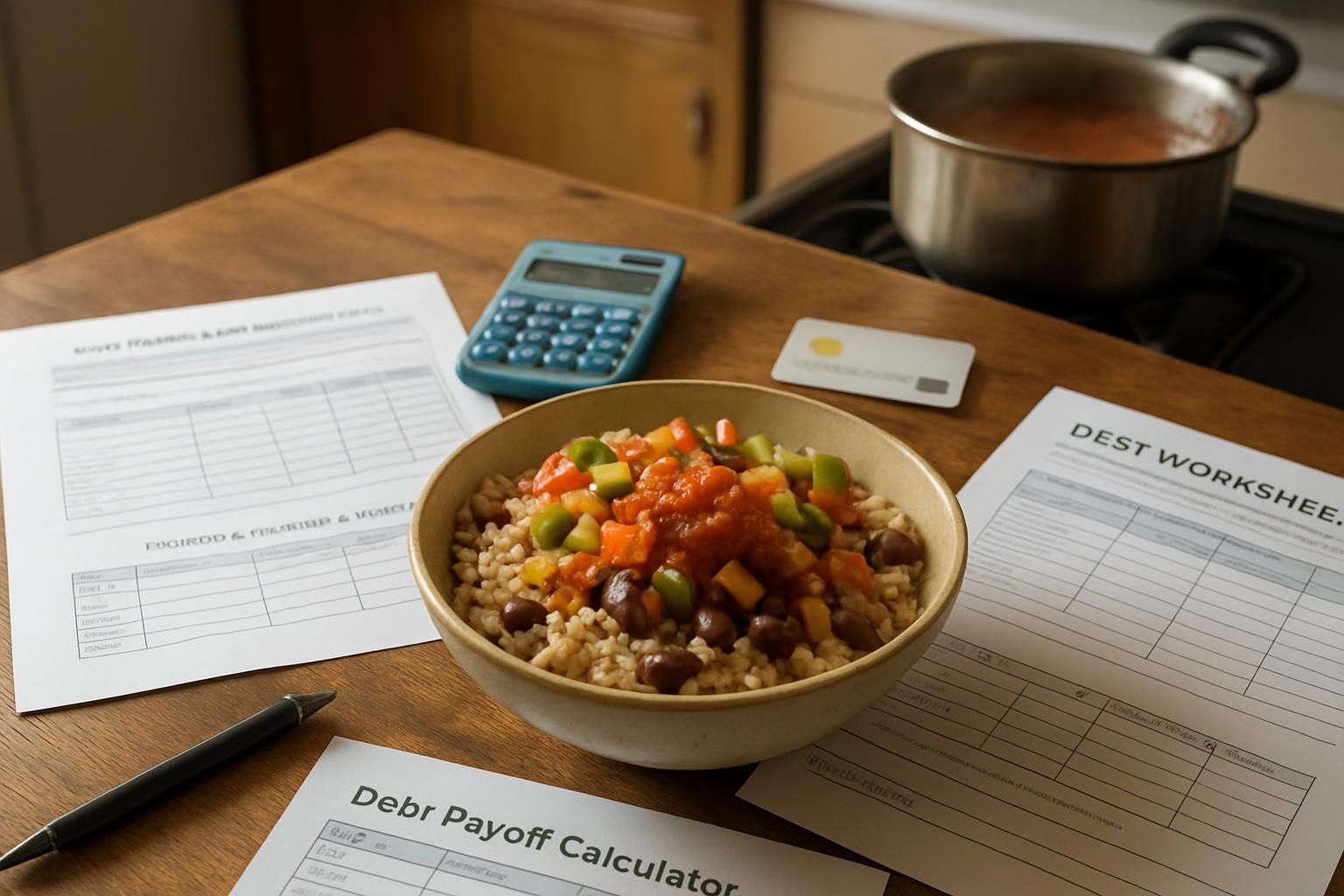
If you cannot see the savings, they tend to disappear. A simple tracker keeps the win visible and tied to your debt.
- Write your baseline. Example: you normally spend about $150 a week on groceries (an estimate; use your own number).
- Log actual spending each week. Say you spent $30 on fresh items.
- Subtract to find the savings. $150 minus $30 equals $120 saved.
- Make the payment and record it. Note the date and which debt received it.
Here is how the totals might look over a four-week challenge:
- Week 1: baseline $150, spent $35, saved $115
- Week 2: baseline $150, spent $25, saved $125
- Week 3: baseline $150, spent $30, saved $120
- Week 4: baseline $150, spent $40, saved $110
- Total saved: $470
Those numbers are an illustration, not a promise. Your result depends on your household size, how stocked your kitchen is and your normal spending.
Put the tracker where you will see it, such as a fridge sheet or a spreadsheet. Our guide to debt-free charts shows visual ways to log each payment, and the comparison of payoff apps and a simple spreadsheet can help you pick a method.
A savings number only matters once it lands on a balance. Move the money the same week you save it.
Where to Send the Savings for the Biggest Impact
A pantry challenge gives you a lump of extra cash. Where it goes matters.
- Follow your plan. If you use the snowball, aim it at your smallest balance. If you use the avalanche, aim it at your highest rate. Our snowball vs. avalanche comparison breaks down the trade-offs.
- Make it a rollover. Add the savings on top of your minimums so the extra keeps compounding in your favor. See how this works in debt stacking and the rollover payment.
- Check the payoff date. Plug the extra amount into the Debt Burn-Down Calculator to see how many months it removes.
Here is a quick example. Suppose you carry $4,000 at 22% APR. That is roughly $73 a month in interest at the start (an estimate: $4,000 x 22% / 12). Throwing a $470 challenge payment at that balance cuts the principal immediately and trims the interest charged from then on.
If your rate is the real drag, saving on groceries is only half the lever. You can also request free options to lower your interest rate through the form on this page, such as a 0% balance transfer or a consolidation loan. Read our balance transfer guide to understand the fees and limits before you decide.
Mistakes to Avoid and How to Keep Going
- Going too extreme. A zero-dollar rule can backfire into a binge-shopping weekend. Keep a small fresh-food budget.
- Forgetting to move the money. Savings that stay in checking drift into everyday spending.
- Ignoring food safety. Check dates, store leftovers promptly and follow safe handling basics from the federal food safety resource.
- Skipping a restock plan. After the challenge, rebuild slowly and shop with a list so you do not undo the progress.
Motivation dips around week two. If that happens, review your tracker and read our tips on how to stay motivated paying off debt. When you want a fuller plan, start with the debt payoff plans guide and build your next step from there.
Ready to make those saved dollars go further? You can request your free rate-lowering options with the form on this page, no obligation.
Frequently Asked Questions
How long should a pantry challenge last?
Two weeks is a manageable first run. If it goes well, extend to four weeks or repeat it a few times a year. Longer challenges save more but need more variety in your food supply.
How much can I realistically save?
It varies widely. A household that normally spends $600 a month on groceries might cut that by a third to a half during a challenge, but only if the pantry and freezer are reasonably stocked. Use your own baseline rather than a generic number.
Do I have to spend zero dollars at the store?
No. Most people set a small weekly allowance for fresh items like milk, eggs and produce. A flexible rule is easier to stick with than an all-or-nothing one.
What if I have kids or dietary needs?
Adapt the rules. Buy essentials your household needs, and plan meals around allergies or medical diets. If your situation is complicated, a registered dietitian or your doctor can help you plan safely.
This article is educational and not financial advice. For guidance on your specific situation, consider speaking with a qualified financial professional or nonprofit credit counselor.
See free options to lower your interest rate
A partner will review your options with you for free, with no obligation, so your saved dollars go further toward debt.

