
Quick answer: Refinancing a car loan is worth it when the interest you save over the life of the new loan is larger than the fees you pay to get it, and when you do not stretch the term so far that total interest goes up. An auto loan refinance break-even calculator is just two simple formulas: fees divided by monthly savings, and old total cost versus new total cost. This guide shows both, with real numbers.
Key takeaways
- Break-even months = total refinance costs ÷ monthly payment savings. If you will not keep the car that long, skip it.
- A lower payment is not the same as a lower cost. Longer terms can quietly add hundreds or thousands in interest.
- Fees and title costs are small but real. Count them before you apply.
- Your rate depends on your credit, the car’s age and mileage, and the loan balance.
Before you fill out a single application, run the math on paper. It takes ten minutes, and it keeps you from swapping a bad loan for a slightly different bad loan. If you want to see rate options first, you can request free options to lower your interest rate using the form on this page.
What you need to gather before you calculate
Pull these numbers from your current lender’s online account or latest statement. Guessing throws off the whole comparison.
- Current payoff amount (not the original balance; ask for a 10-day payoff quote).
- Current APR and monthly payment.
- Months remaining on your loan.
- Any prepayment penalty. Most auto loans do not have one, but check your contract.
- Your credit score range, since it drives the offers you will get.
Then collect the same details for each refinance offer: new APR, new term, origination or application fees, and your state’s title and registration transfer costs. If you are unsure what rate you should expect, start with how to check current auto loan rates before you shop.
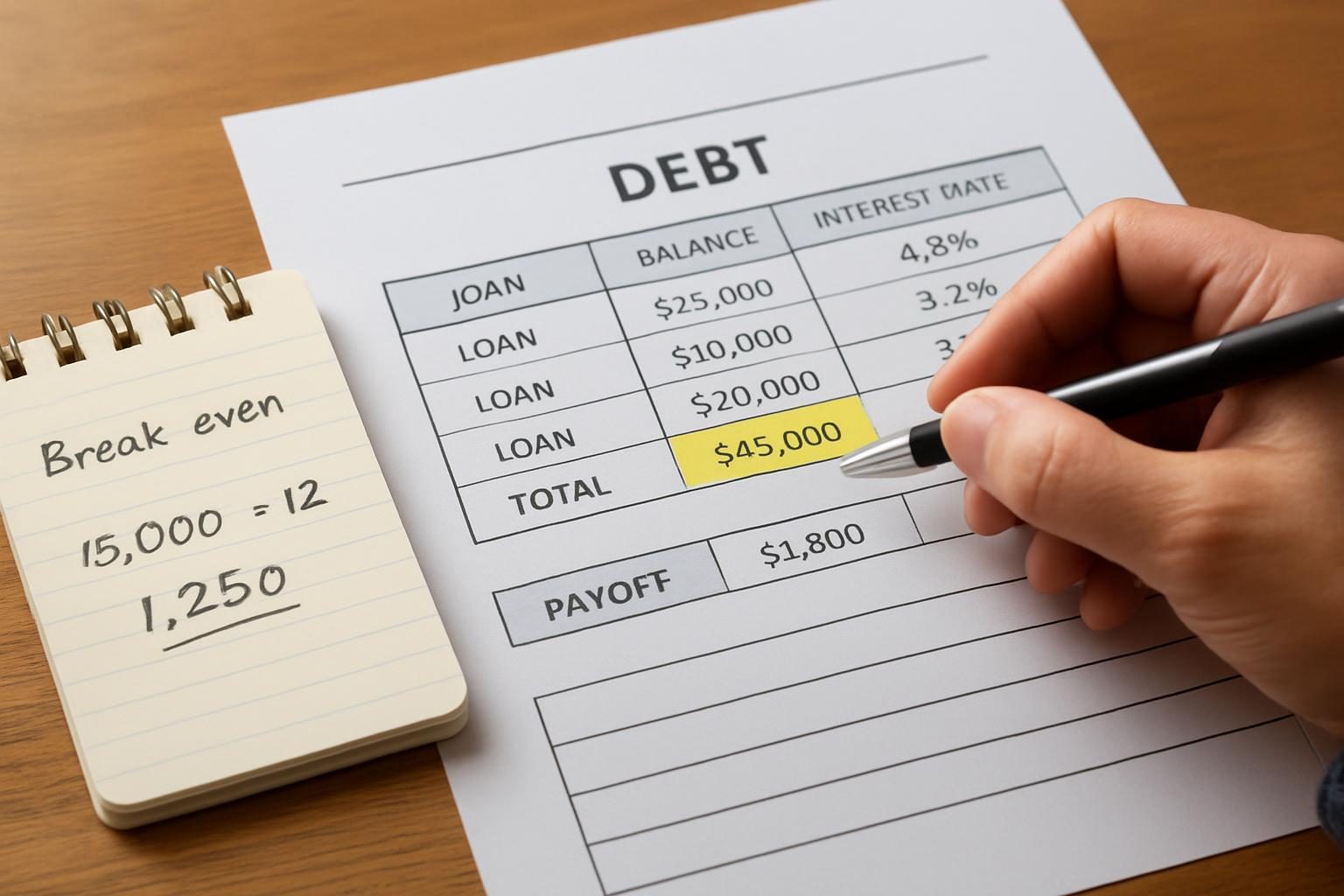
The four moving parts: APR, term, fees and title costs
Every refinance comes down to four levers. Change one and the others can cancel it out.
New APR
This is the main reason to refinance. Rates depend on your credit, income, the vehicle’s age and mileage, and the loan-to-value ratio, so your offer may look very different from someone else’s. Used-car loans usually price higher than new-car loans; see what to expect on used car loan rates for context.
New term
The term is how many months you will pay. A longer term lowers the payment but gives interest more time to accumulate. This is where most refinancing mistakes happen.
Fees
Some lenders charge an application or origination fee; many charge none. Estimate anywhere from $0 to a few hundred dollars, and get the exact figure in writing.
Title and registration costs
A new lender becomes your lienholder, so the title record has to be updated. States set their own fees, and they are often modest, commonly tens of dollars up to roughly one or two hundred. Check your state DMV’s published fee schedule for the real number.
Pro tip: Ask every lender for the “all-in” cost of closing the loan. Add it to your payoff balance so you compare apples to apples.
A lower monthly payment feels like a win, but total interest paid is the number that tells the truth.
How to calculate your break-even point
Here is the simple version of an auto loan refinance break-even calculator you can do with a phone calculator.
- Add up all refinance costs. Fees plus title and registration transfer costs.
- Find your monthly savings. Old payment minus new payment.
- Divide costs by monthly savings. The result is the number of months until you recoup your costs.
- Compare to your timeline. If you plan to keep the car and the loan longer than the break-even, refinancing can pay off.
Example (illustrative numbers, not a quote): You owe $18,000 at 9.5% APR with 48 months left. Your payment is about $452. You refinance to 6.5% over the same 48 months, which brings the payment to about $427. Costs are $150 in fees and title transfer.
- Monthly savings: about $25
- Break-even: $150 ÷ $25 = 6 months
- Interest saved over 48 months: roughly $1,200 minus the $150 cost, so about $1,050 net
That is a clear win because the term stayed the same. The savings come purely from the rate drop.

The extended-term trap: when a lower payment costs you more
Now take the same loan and stretch it. Same $18,000 balance, but the lender offers 6.5% over 60 months instead of 48.
- New payment: about $352, which is $100 less per month than before.
- Break-even on fees looks instant, since you save $100 a month.
- But you pay for 12 extra months. Total interest on the new loan is about $3,100, versus roughly $3,700 remaining on the old one.
You still come out slightly ahead in that case, but only because the rate drop was large (three points). Shrink the rate drop to one point and the picture flips: the longer term can leave you paying more in total interest, even though the monthly payment looks better.
The test: Always compare total remaining cost, not just the payment.
- Old loan total remaining = current payment × months left.
- New loan total = new payment × new term + fees and title costs.
- If the new total is lower, it saves money. If it is higher, you are buying cash flow, not savings.
Longer terms also raise the risk of owing more than the car is worth. If that is already your situation, read upside down on your car loan: 5 ways out before refinancing.
Keep the same term, or shorten it, and the interest savings are real. Stretch it and you may just be renting a lower payment.
A smarter move: refinance, then keep paying the old amount
If you refinance into a longer term to get a lower required payment, you can still capture most of the benefit by paying your old amount anyway. The extra goes straight to principal, shortening the loan and cutting interest.
This gives you the safety net of a lower minimum without locking in the slower payoff. You can test scenarios with the car loan payoff calculator or the pay off car loan early calculator to see how much interest each extra payment saves.
When refinancing makes sense, and when to wait
Good candidates:
- Your credit score has improved meaningfully since you took the loan.
- You financed at a dealership with a marked-up rate and rates have since come down.
- You have plenty of months left, so there is time for interest savings to add up.
- You can keep or shorten your term.
Reasons to wait or skip:
- You are near the end of the loan, where most of each payment is already principal.
- The car is older, high mileage, or worth less than you owe, which can limit lender approval.
- The rate drop is under about one point and fees would eat the savings.
- You plan to sell the car soon, before you reach break-even.
For a deeper look at the payment side, see when refinancing lowers your payment and when it does not. And if your real goal is to be done with the loan, the car loan payoff guide covers the full set of strategies. Rates are not guaranteed and depend on your credit profile, so treat every number above as an estimate until you have a written offer.
Ready to see what your rate could look like? Request free, no-obligation refinance options using the form on this page.
Frequently asked questions
How do I calculate break-even on an auto refinance?
Add all refinance costs (fees plus title and registration), then divide by your monthly payment savings. The answer is the number of months until you recoup those costs. Also compare total remaining payments on the old loan against total payments on the new one, since a longer term can hide extra interest.
Will refinancing hurt my credit score?
Applying usually triggers a hard inquiry, which can cause a small, temporary dip. Rate shopping within a short window is typically treated as a single inquiry by common scoring models, so compare offers close together. Paying on time on the new loan helps your credit over time.
How soon can I refinance after buying a car?
Many lenders want a few months of payment history, and some require the title to be processed first. There is no universal rule, so check with the lender. Waiting until your credit improves can also earn a better rate.
Is it worth refinancing for a 1% lower rate?
Sometimes. On a larger balance with several years left, one point can save hundreds of dollars. On a small or nearly paid-off loan, fees can cancel the savings. Run the break-even math with your own numbers to decide.
See your free car loan refinance options
A partner will review your details and show you no-obligation options to lower your rate, free.


