
Quick answer: A student loan extra payment calculator shows how much sooner you’d be debt-free and how much interest you’d skip if you add money to your regular payment. On a $30,000 loan at 6.5% over 10 years, an extra $100 a month saves roughly $3,300 in interest and about three years of payments. The savings only happen if the extra money goes to principal on your highest-rate loan.
Key takeaways
- Small extras add up: $50 to $200 a month can cut years off a standard 10-year loan.
- Rate decides the order: after minimums, extra money usually belongs on the highest-rate loan.
- Federal and private are different: federal loans carry protections you may not want to trade away for speed.
- Check the application: servicers may split extra money across loans or treat it as an early payment instead of reducing principal.
Student loan interest accrues every day, so every dollar of principal you remove stops earning interest for the rest of the loan. That is the whole engine behind early payoff. Below are the numbers, so you can see the effect before you change your budget.
Want to see if a lower rate could stack on top of your extra payments? You can request free options to lower your interest rate using the form on this page.
Student Loan Extra Payment Calculator: The Math Behind the Savings
Every payment is split into interest and principal. Interest for the month is roughly your balance times the annual rate divided by 12. Whatever is left of your payment reduces principal.
Here is what a calculator is doing behind the scenes:
- Monthly interest = balance × (annual rate ÷ 12).
- Principal paid = your payment minus that interest, plus any extra you add.
- New balance = old balance minus principal paid. Repeat until it hits zero.
Because the balance drops faster each month with an extra payment, the next month’s interest is smaller, so more of your regular payment goes to principal. That snowball effect is why the savings grow faster than the extra amount itself. You can run your own numbers with our student loan payoff calculator with extra payment scenarios.

Example: $30,000 at 6.5% With $50, $100 and $200 Extra
Start with a standard 10-year loan: $30,000 at 6.5%. The required payment is about $341 a month, and total interest comes to roughly $10,900. Here is what happens when you add extra each month (all figures are estimates and rounded):
- No extra ($341/month): 120 months, about $10,900 in interest.
- $50 extra ($391/month): about 100 months (8 years 4 months), about $8,900 in interest. Saves roughly $2,000 and 20 months.
- $100 extra ($441/month): about 85 months (7 years 1 month), about $7,500 in interest. Saves roughly $3,300 and 35 months.
- $200 extra ($541/month): about 66 months (5 years 6 months), about $5,800 in interest. Saves roughly $5,100 and 54 months.
Notice the pattern. Doubling the extra from $100 to $200 does not just double the savings. You gain about $1,800 more in interest savings and nearly two more years of freedom.
Pro tip: Find the extra by working backward from a number you can sustain. A realistic $75 you never miss beats a heroic $300 you abandon in month three.
A $100 monthly extra on a $30,000 loan can shave about three years off.
Which Loan Gets the Extra Money First
If you have more than one loan, put minimums on all of them and send the extra to the highest interest rate. This is the debt avalanche method, and it is the lowest-cost order mathematically.
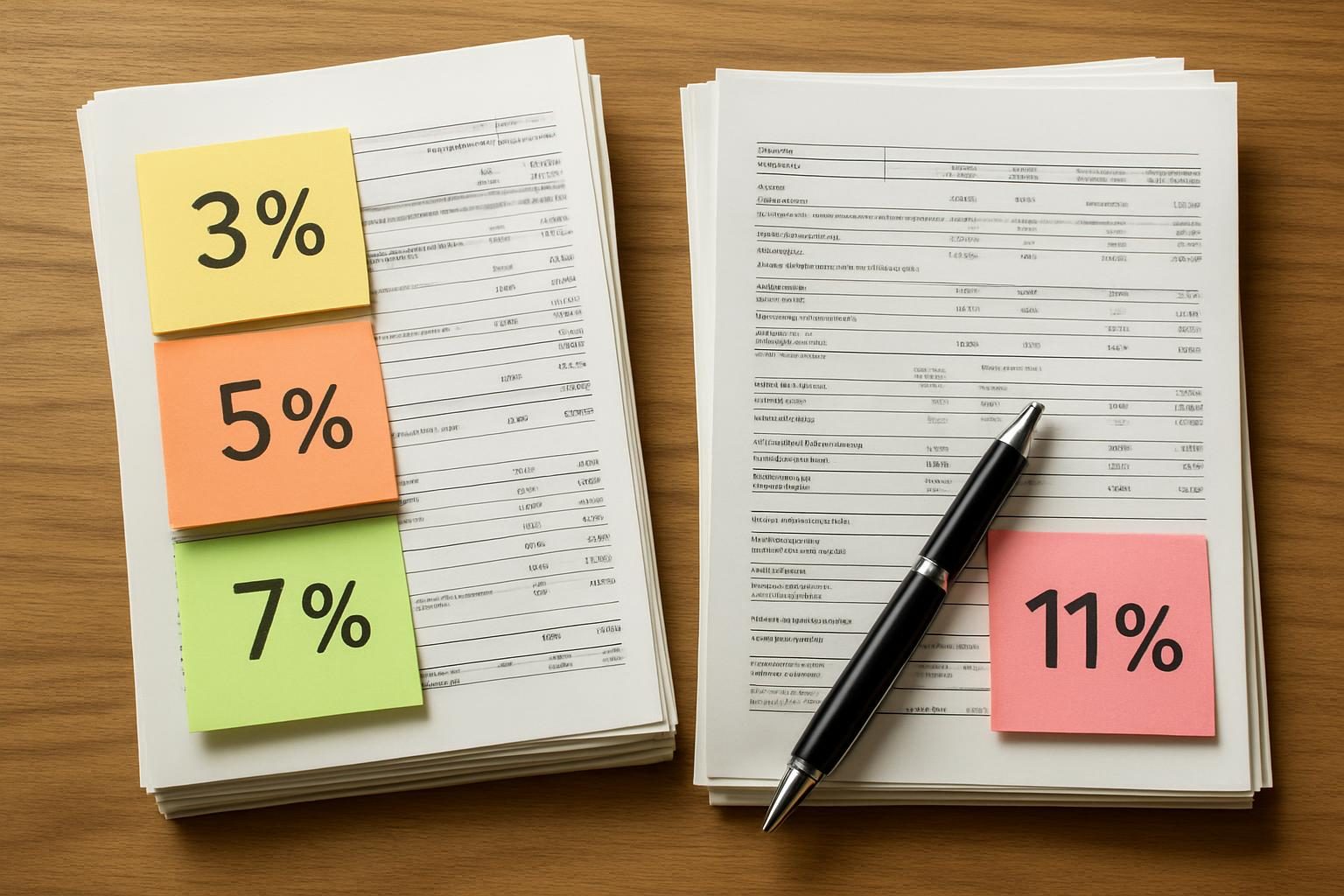
Take two loans: Loan A is $12,000 at 4.5% and Loan B is $8,000 at 8%.
- Loan A costs about $45 a month in interest ($12,000 × 0.045 ÷ 12).
- Loan B costs about $53 a month, even though its balance is a third smaller.
- Every $2,400 you remove from Loan B stops about $192 a year in interest. The same $2,400 on Loan A stops about $108.
The higher rate wins even though Loan B is not the biggest balance. If you want the motivation of quick wins instead, our debt payoff plans guide compares snowball and avalanche side by side. You can also model both with the Debt Burn-Down Calculator.
Federal vs Private Balances: What Changes
The math is the same, but the risk is not. Federal loans come with options that private loans generally do not, and extra payments can quietly use up cash you may need in a rough stretch.
Federal loans
- Protections: income-driven repayment, deferment, forbearance and, for some borrowers, forgiveness programs.
- No prepayment penalty: federal loans can be paid early without a fee.
- Watch out: if you are pursuing forgiveness, extra payments may shrink a balance that would have been forgiven. Read student loan forgiveness vs payoff before you accelerate.
Private loans
- Fewer safety nets: hardship options vary by lender and are usually limited.
- Rates can be higher or variable: check your agreement, because a variable rate can climb.
- Prepayment penalties: uncommon for student loans, but confirm in your contract.
A common approach: if a private loan carries the highest rate and you have an emergency fund, attack it first. If your federal loans have a higher rate, the choice is closer, and the protections may justify a slower pace. We break down the trade-offs in paying off private vs federal student loans. For official details on federal repayment options, see Federal Student Aid’s repayment resources.
Extra money only works if the servicer applies it to principal on the right loan.
Make Sure Extra Payments Hit Principal
This is where good plans leak. Servicers have default rules for extra money, and those rules do not always match your goal. Common surprises:
- Paid ahead: the extra is treated as a prepayment of future bills, so your due date moves forward but principal barely drops.
- Spread across loans: the extra is divided among all your loans instead of landing on the highest rate.
- Interest first: payments generally cover accrued interest and fees before principal. That is normal, but it means a late-month payment may reduce principal less than you expected.
To control where your money goes:
- Specify the loan. Use the servicer’s extra payment option or write in the loan you want it applied to.
- Request “apply to principal, do not advance due date.” Use those exact words if there’s a field or note line.
- Check the next statement. Confirm the principal balance dropped by the extra amount, and that the right loan changed.
- Set up a recurring extra, not a one-off, so you do not rely on willpower each month.
Step-by-step instructions are in our guide on how to make extra student loan payments so they hit principal.
How to Run Your Own Numbers in Five Minutes
- List every loan: balance, rate, minimum payment and whether it is federal or private.
- Pick an extra amount from your budget. Try $50, $100 and $200 as scenarios.
- Enter the highest-rate loan into a calculator with the extra payment field.
- Compare payoff dates and total interest with and without the extra.
- Re-run it when a loan is paid off, and roll that freed-up minimum into the next loan. This is the rollover effect explained in debt stacking.
Also consider the rate itself. If you have a stable income and good credit, refinancing private loans (or federal loans, with caution) could cut your rate and make every extra dollar work harder. Read when student loan refinancing saves money and when it backfires first, since refinancing federal loans into a private one ends federal protections. If you carry credit card balances too, see our upcoming guide on whether to pay off a credit card or student loan first. For a full overview, start with the student loan payoff guide.
Ready to see whether a lower rate could shorten your timeline even more? Request free, no-obligation rate options with the form on this page.
FAQ
Does an extra payment lower my monthly bill?
Usually not. Extra payments typically shorten the loan term rather than reduce the required monthly amount. Some servicers will mark you as paid ahead, but keep paying your regular amount unless you confirm otherwise.
Is it better to pay extra every month or in one lump sum?
Sooner is better, because interest accrues daily. A monthly extra works well for steady budgets, while a lump sum from a bonus or tax refund makes sense when you get one. Both are fine if applied to principal.
Should I pay extra on student loans or credit cards first?
Compare interest rates. Credit cards often carry higher APRs than student loans, so extra money usually saves more there, but your situation may differ. A debt avalanche calculator can rank all your balances by cost.
Do extra student loan payments hurt my credit?
Paying down debt is generally good for your finances. Your score may dip slightly when a loan is paid off and the account closes, but this is usually temporary. Talk to a qualified financial professional if you are planning a major purchase soon.
Get free options to lower your student loan rate
A partner will share free, no-obligation options to lower your interest rate, and you decide whether to accept any of them.


