
Quick answer: A biweekly mortgage plan means paying half your monthly payment every two weeks. That adds up to 26 half-payments, or 13 full payments, per year, so you make one extra payment annually. On a typical 30-year loan, that can cut roughly 4 to 6 years off the term, and you can get the same result by adding 1/12 of your payment to each monthly check without paying anyone a fee.
Key takeaways
- 26 half-payments = 13 full payments, so you pay one extra month’s worth each year.
- On a $300,000 loan at 6.5%, that extra payment saves an estimated $75,000 to $85,000 in interest.
- Adding 1/12 of your payment to every monthly payment gets you almost the same result.
- Third-party biweekly programs often charge setup or per-payment fees you do not need.
- Always confirm that extra money is applied to principal, not held or applied to next month’s bill.
If you want to see exactly what a biweekly schedule does to your loan, the math below works as a simple biweekly mortgage payment calculator you can run on a napkin. Then you can decide whether to switch or just round up your monthly payment.
Want help lowering your rate before you start paying extra? Request free options to lower your interest rate using the form on this page.
How 26 Half-Payments Become 13 Full Payments
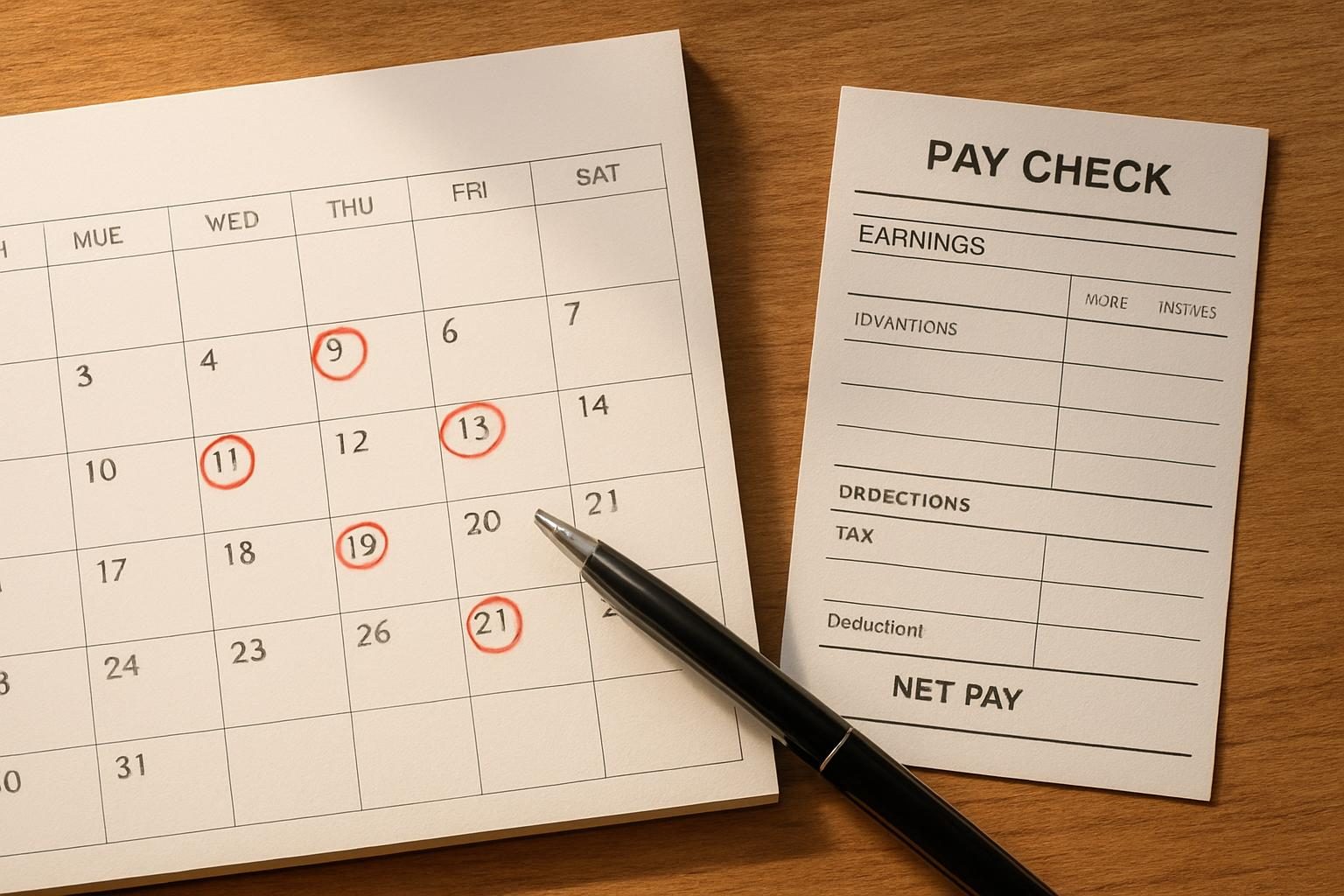
The trick is a calendar quirk. A year has 12 months but 52 weeks, which is 26 two-week periods. If you pay half your mortgage every two weeks, you make 26 half-payments.
- Monthly plan: 12 payments x $1,896 = $22,752 per year
- Biweekly plan: 26 payments x $948 = $24,648 per year
- Difference: $1,896 extra per year, exactly one full payment
That extra payment goes straight to principal. Less principal means less interest next month, and the savings compound from there.
A 30-Year Example With Real Numbers
Take a $300,000 loan at 6.5% fixed for 30 years. The principal and interest payment is about $1,896 per month. These figures are estimates and will vary with your exact rate and any escrow.
Standard monthly payments
- Payoff time: 30 years (360 payments)
- Total interest: roughly $382,600
True biweekly payments of $948
- Payoff time: roughly 24.5 to 25 years
- Total interest: roughly $300,000 to $305,000
- Estimated interest saved: about $75,000 to $85,000
The earlier you start, the bigger the effect. Because interest is front-loaded in a 30-year loan, an extra payment in year 2 does far more than the same payment in year 22. For a deeper look at timing, see our breakdown of what one extra mortgage payment a year does.
One extra payment a year is not magic; it is simply 1/12 more principal, paid early.
Biweekly vs. Adding 1/12 Extra Each Month
Here is the part most lenders and biweekly companies skip: you do not need a biweekly schedule to get the benefit. You can divide your monthly payment by 12 and add that amount to each monthly payment.
On our $1,896 payment, 1/12 is $158. Paying $2,054 monthly gives you the same total extra principal over a year ($1,896) as biweekly payments do.
- Biweekly: Slightly faster, because each half-payment hits principal a bit earlier in the year and interest accrues on a slightly lower balance in between (if your servicer applies it that way).
- Monthly + 1/12: Almost identical. The gap is typically a few months of payoff time and a modest amount of interest on a 30-year loan.
- Simplicity: Monthly is easier. One payment, one due date, no coordination with a servicer or third party.
For most households, the monthly extra wins on convenience and cost. If your paycheck arrives every two weeks, though, a true biweekly schedule can feel more natural because the money leaves right as it arrives.

Beware of Third-Party Biweekly Fees
Some companies offer to set up a biweekly plan for you. They collect your payments every two weeks, then send your lender one monthly payment, plus an extra one each year. The risk is that you pay for something you can do yourself.
Watch for these red flags:
- Setup fees: Often a few hundred dollars, though amounts vary by provider (estimate).
- Per-payment or monthly fees: A small charge on every transfer can eat years of savings.
- Holding your money: Some programs keep your half-payments in an account until enough builds up, so your lender does not see a payment until later. That can delay interest savings and risk late fees.
- Unclear principal application: Ask in writing how and when extra funds reach your lender.
Pro tip: Call your mortgage servicer first. Many offer a free biweekly option, and almost all let you add an extra principal amount online at no cost.
A fee of $300 plus $3 per transfer over a year could easily cost more than the interest you save in the first few years. Do the math before you sign anything.
If a company charges you to make an extra payment, you are paying for a button you already have.
How to Set Up Extra Payments the Right Way
- Check for a prepayment penalty. Most modern mortgages do not have one, but look at your loan documents or ask your servicer.
- Run your numbers. Use the extra principal payment calculator to compare a biweekly schedule against a flat monthly add-on.
- Choose your method. Either divide your payment by 12 and add that to each month, or ask your servicer about free biweekly drafts.
- Specify principal. Mark extra amounts as “principal only” so they do not get treated as an early payment on next month’s bill.
- Verify on your statement. Within a month or two, confirm the principal balance dropped by the amount you expected.
For a side-by-side look at other approaches, our guide on how to pay off your mortgage early compares seven strategies, and the dedicated page on whether biweekly mortgage payments really save money goes further on the lender side. You can also see the full picture on our mortgage payoff guide.
Is Paying Extra the Right Move for You?
Extra mortgage payments are a guaranteed return equal to your loan rate, but they are not always the best use of cash. Before you commit, weigh these:
- High-interest debt first. If you carry credit card balances at 20% or more, paying those off beats shaving a 6.5% mortgage. Our debt payoff plans guide shows how to order your debts.
- Emergency fund. Money sent to your mortgage is hard to get back out. Keep a cash cushion first.
- Investing alternatives. The tradeoff depends on your rate and risk tolerance. See paying off your mortgage early or investing the difference.
- Rate matters. If your rate is high, a refinance might save more than any payment trick. Compare options through our lower your rate page.
Not sure where to start? Request free options to lower your rate with the form on this page, then compare what you find against the savings from extra payments. A qualified financial professional can also help you weigh the tradeoffs for your situation. For another angle on how interest works against you, read about the pay off or invest decision.
Frequently Asked Questions
Does a biweekly mortgage payment really save money?
Yes, because it results in one extra full payment per year that goes to principal. On a 30-year loan, that typically saves tens of thousands of dollars in interest and cuts several years off the term, though exact results depend on your rate and balance.
Is it better to pay biweekly or add extra to my monthly payment?
They produce nearly the same result if the extra amount equals one monthly payment per year. Adding 1/12 of your payment each month is simpler and avoids fees, while true biweekly can be slightly faster.
Will my lender accept biweekly payments?
Not all do. Some servicers offer a free biweekly program, some do not, and some hold half-payments until a full one accumulates. Ask yours how it applies partial payments before you change anything.
Are biweekly payment companies worth the fee?
Usually not. You can recreate the same effect yourself for free by paying a bit extra each month toward principal. If you do use a third party, get every fee and the timing of lender payments in writing first.
See free options to lower your mortgage rate
A partner will share free, no-obligation options so you can compare refinancing against extra payments.


