Quick answer: A negative equity car loan means you owe more than the car’s current market value. To fix it, you can pay extra toward principal, keep driving the car until the balance catches up, refinance to a lower rate if you qualify, and make sure GAP coverage protects you in the meantime. Avoid rolling the shortfall into a new car loan, because it makes the next loan bigger and the hole deeper.
Key takeaways
- Equity = value minus payoff. If the result is negative, you are upside down.
- Time and extra principal both close the gap. Cars lose value fastest early, while loans shrink slowly at first.
- Keeping the car is usually the cheapest fix. Selling or trading in forces you to cover the shortfall.
- GAP coverage protects you from a total loss, not from an ordinary underwater loan.
- Never roll negative equity into a new loan. You pay interest on a car you no longer own.
Being underwater on a car loan feels like being stuck, but it is a math problem with a math solution. This guide walks through how to measure the gap, the options for closing it, and the one move that makes it worse. If you want to see whether a lower rate could shrink the problem, you can request free options to lower your interest rate using the form on this page.
What Is a Negative Equity Car Loan?
A negative equity car loan, often called an upside-down or underwater loan, is one where your payoff balance is higher than what the car would sell for today. The lender is owed more than the vehicle is worth.
It happens for a few predictable reasons:
- Fast depreciation. New cars typically lose a meaningful chunk of their value in the first year or two.
- Small or no down payment. You start with little or no equity cushion.
- Long loan terms. With 72- or 84-month loans, the balance falls slowly while the car’s value keeps dropping.
- High interest rates. More of each early payment goes to interest instead of principal.
- Rolled-in balances. A prior loan’s shortfall, add-ons or fees financed into the new loan start you underwater on day one.
Negative equity is not a crisis if you plan to keep the car and keep paying. It becomes a problem when you need to sell, trade in, or the car is totaled or stolen.
How to Calculate Your Car Equity
The formula is simple: equity = current market value minus loan payoff amount. A negative result is your negative equity.
- Get your payoff amount. Call your lender or check your online account for the 10-day payoff figure. This includes accrued interest, so it can differ from your statement balance.
- Estimate market value. Check several free valuation tools and compare the private-party and trade-in values. Browse local listings for the same year, trim and similar mileage as a reality check.
- Subtract. Value minus payoff gives your equity.
Example (illustrative numbers): You owe $22,000. Similar cars are listing for about $17,500, and a dealer might offer $16,000 on trade. Your equity is roughly negative $4,500 on a private sale and negative $6,000 on a trade-in. That trade-in figure is the number a dealer would try to roll into your next loan.
Pro tip: Use the trade-in value, not the optimistic retail value, when you test how bad the gap is. That is the number you will actually face if you have to exit the loan.
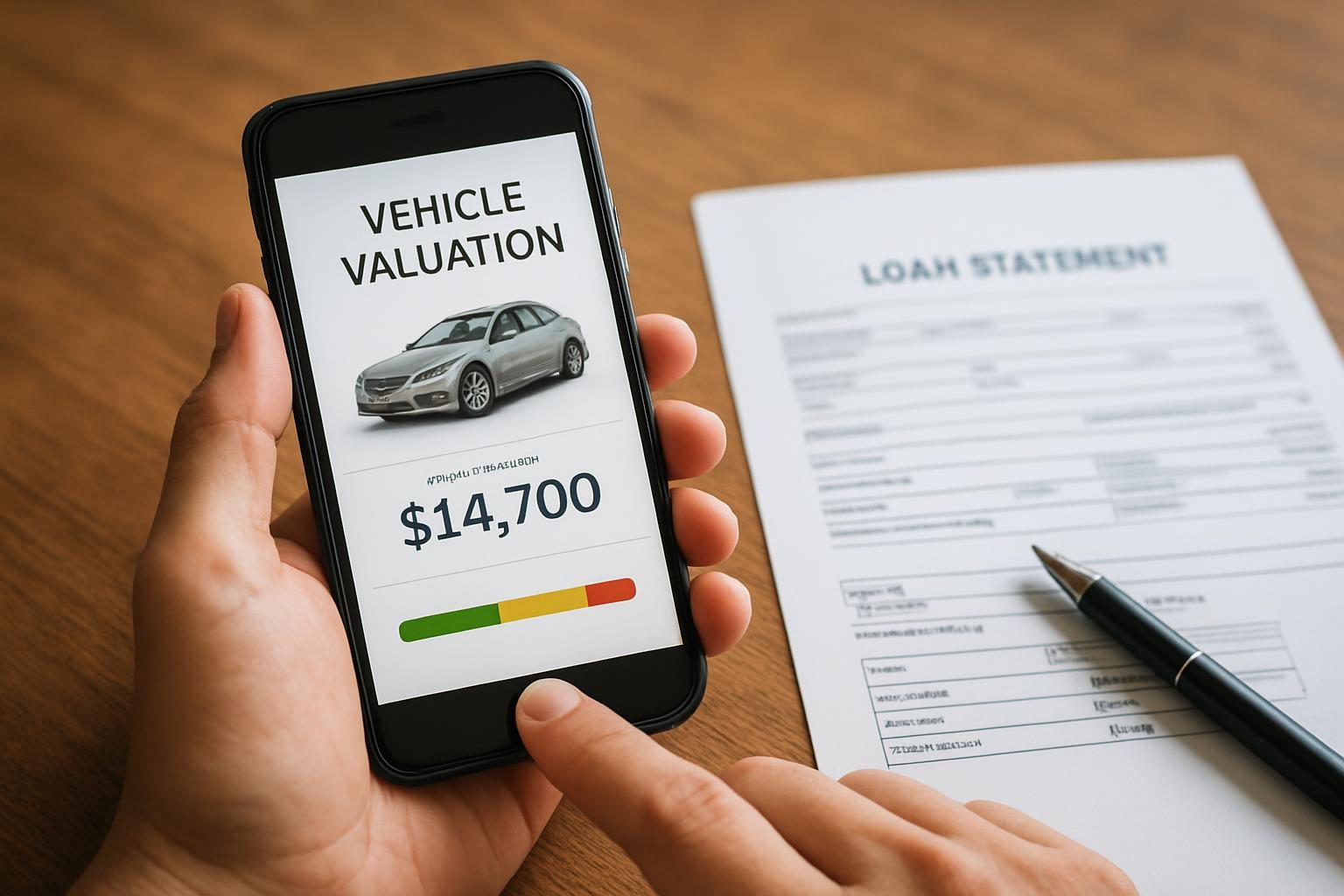
Negative equity is just two numbers on a page: what the car is worth and what you still owe.
Option 1: Pay Extra Toward Principal
The most direct way to close the gap is to shrink the loan faster than the car depreciates. Extra payments go straight at the balance, which also cuts the interest you will pay over the life of the loan.
- Add a fixed extra amount monthly. Even $50 to $100 extra can shave months off the term.
- Make one extra payment per year. A tax refund or bonus works well for this.
- Split payments biweekly, if your lender applies them promptly.
- Round up. Turn a $412 payment into $450 and you will barely notice it.
Always tell your lender the extra money should be applied to principal, not to future payments. Also check your contract for fees first; our guide to checking for a car loan prepayment penalty shows how. To see the savings in numbers, run your loan through the pay off car loan early calculator.
Option 2: Keep the Car and Let Time Work
If your car is reliable and your payment fits your budget, simply keeping it is often the cheapest path. Depreciation slows as a car ages, while your loan balance keeps falling at a steady and accelerating pace. At some point the lines cross and you are back to positive equity.
The trade-off is real. You may be driving an older car with rising maintenance costs while you wait. A rough rule: if repair costs are modest and the car meets your needs, holding on usually beats paying to escape the loan.
Pair this strategy with a payoff plan so you are not just waiting. The car loan payoff guide covers the full toolkit, and the Debt Burn-Down Calculator shows how the car fits alongside your other balances.
Option 3: Refinance an Underwater Car Loan
Refinancing replaces your current loan with a new one, ideally at a lower rate. With negative equity, approval is harder because the lender is financing more than the collateral is worth. Some lenders limit loan-to-value ratios, so a deeply underwater loan may not qualify.
Refinancing can still help when:
- Your credit score has improved since you took the loan.
- Market rates have dropped, or your original dealer-arranged rate was high.
- You keep the same term (or shorter) so you are not stretching the debt.
The danger is lowering the payment by extending the term, which keeps you underwater longer. Work through the numbers with the auto loan refinance break-even calculator before applying, and read refinancing a car loan to pay it off faster for when it helps and when it does not. You can also see free refinancing options through the form on this page.
A lower payment that comes from a longer term can cost you more, not less.
Option 4: Protect Yourself With GAP Coverage
GAP (guaranteed asset protection) coverage pays the difference between what your insurer values a totaled or stolen car at and what you still owe. If you are underwater, a total loss without GAP leaves you paying off a car you no longer have.
Key points to know:
- GAP does not reduce your negative equity. It only protects you if the car is totaled or stolen.
- Dealer GAP is often pricier than adding it through your own auto insurer. Compare before agreeing to it in the finance office.
- Read what it excludes. Some policies do not cover your deductible or missed payments.
- You may be able to cancel it once you have positive equity and get a prorated refund. Ask your provider.
Your insurance agent or lender can confirm exactly how your policy works.
Why You Should Not Roll Negative Equity Into a New Loan
Dealers often make this sound painless: “We’ll just add what you owe to the new loan.” It is one of the costliest moves in car financing.
Here is what happens:
- You owe $6,000 more than your trade is worth.
- That $6,000 is added to the new car’s price, so you finance more than the new car is worth.
- You pay interest on the old car’s shortfall for years.
- The new car also depreciates, so you start even deeper underwater.
- Lenders may charge a higher rate or require a longer term to make the numbers work.
Repeat this cycle and you end up in a permanent loop of owing more than you drive. If you are being pushed to trade out of a loan you cannot afford, read how to get out of a car loan you cannot afford first. A better alternative may be to sell privately and cover the gap with savings or a small, short-term loan, or to wait and pay down the balance.
Ready to explore ways to lower your rate and get ahead of the balance? You can request your free, no-obligation options using the form below.
Frequently Asked Questions
How do I know if I have negative equity on my car loan?
Compare your lender’s payoff amount with the car’s current market value. If the payoff is higher, you have negative equity. Check trade-in and private-sale values for a realistic range.
Can I sell a car with negative equity?
Yes, but you must pay the lender the full payoff to release the title. That means covering the shortfall from savings, or sometimes with a separate loan, so the sale itself does not leave you with leftover debt.
Does GAP insurance help if I am just underwater?
No. GAP only pays out if the car is totaled or stolen. It protects you from owing money on a car you no longer have, but it does not erase negative equity if you keep the car or sell it.
Is it ever okay to roll negative equity into a new loan?
It is rarely a good idea because you pay interest on a car you no longer own and start the new loan deeper underwater. In a true emergency, compare every alternative first, and consider talking to a qualified financial counselor.
Get free options to lower your car loan rate
A partner will review your situation and share free, no-obligation ways to lower your interest rate and shrink what you owe.


