
Quick answer: Sometimes. A balance transfer to pay off a car loan is possible only if the card issuer lets you send money to your lender, usually through a balance transfer check or a loan-account transfer, and the fee plus the new rate still beat what you pay now. Most issuers do not allow transfers to loans they can’t pay as a card payee, so you will need to confirm the options before you apply.
Key takeaways
- Balance transfers are built for credit card debt, but some issuers let you pay a car loan or other loan with a transfer check or direct payment.
- A 3% to 5% fee (an estimate) is the price of admission, so run the math before you move a dollar.
- If you don’t clear the balance before the 0% window ends, the leftover can cost more than your old car loan.
- Many car loans already carry modest rates, so a transfer often beats refinancing only when your loan APR is high.
- You will usually need good credit and a limit big enough to cover the payoff amount.
If you are staring at a car loan at 9%, 12%, or higher and wondering whether a 0% card can wipe out the interest, you are asking the right math-first question. The answer depends on a few mechanics that most promotional pages skip. Let’s walk through them.
Want to see what rates you might qualify for? You can request free options to lower your interest rate using the form on this page.
Can You Do a Balance Transfer to Pay Off a Car Loan?
It depends on the issuer and the offer. A standard balance transfer moves debt from one credit card to another. A car loan is an installment loan, so it does not fit that process automatically.
There are usually three ways people try it:
- Balance transfer check: The card issuer mails you a check drawn on your new card’s credit line. You deposit it or send it to your lender, and it posts as a balance transfer at the promotional rate.
- Direct payee transfer: Some issuers let you add a loan servicer as a payee when you request a transfer online or by phone. Many do not, so ask.
- Cash advance: This is the trap. Moving money from a card to a bank account often counts as a cash advance, with a fee and a high APR that starts immediately. A cash advance is not a balance transfer.
Always read the offer terms to see whether the 0% rate applies to checks and to non-card debts. The fine print decides everything. If you want the full process, see our guide on how to do a balance transfer, step by step.
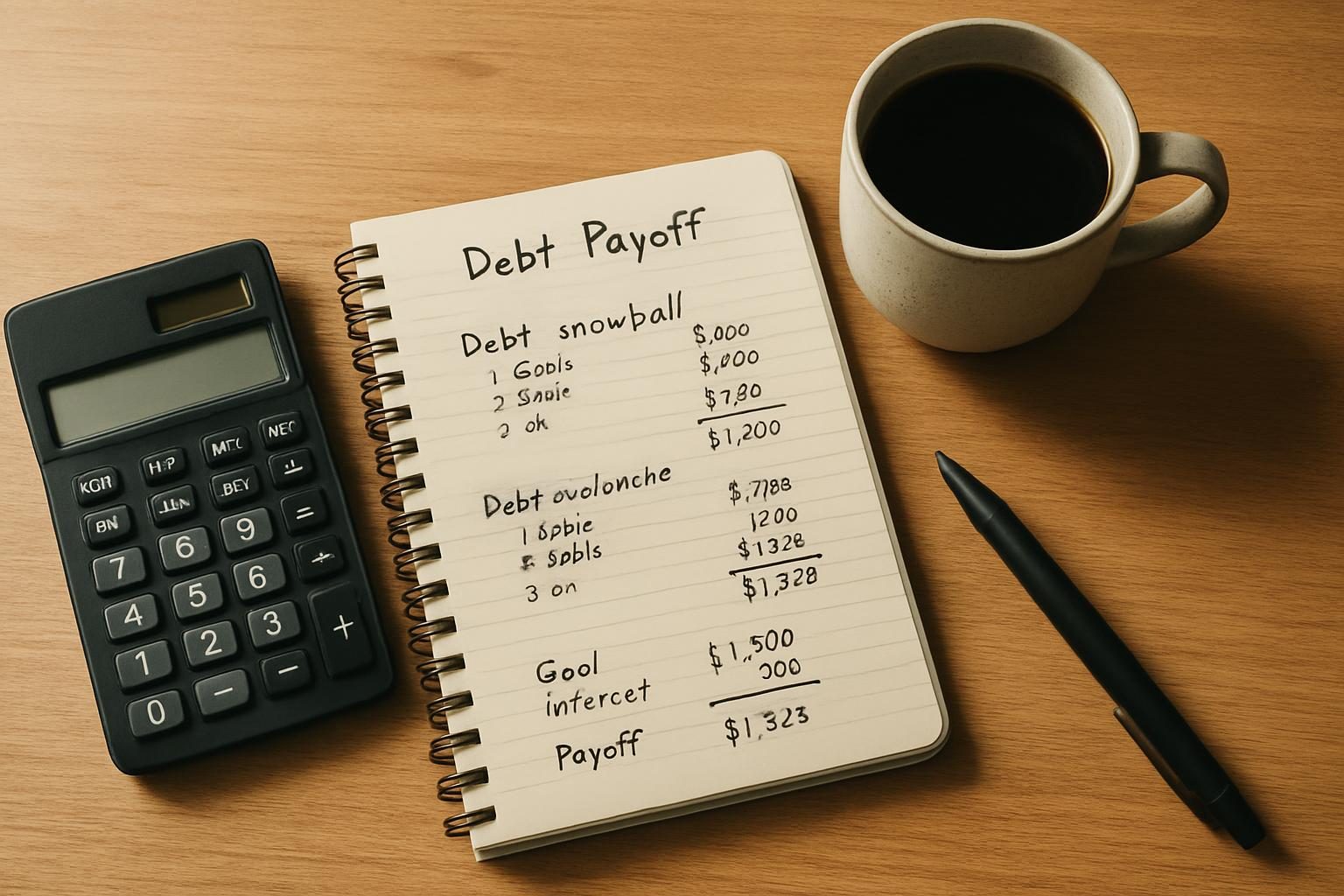
How Balance Transfer Checks Work
Balance transfer checks are the most common route for paying a loan with card credit. They look like a regular check, but they are tied to your card account.
- Request or find the checks. Some issuers send them with an offer. Others will mail them on request.
- Check the terms. Look for the promo APR, the length of the 0% window, the transfer fee, and whether the check qualifies for the promo or posts as a cash advance.
- Get your exact payoff amount. Ask your lender for a payoff quote good through a specific date, not the statement balance. Our explainer on payoff amount vs. statement balance covers why those numbers differ.
- Write the check to your lender. Include your loan number, and send it early enough to arrive before your payoff date.
- Keep paying until it posts. Do not stop making your car loan payments until the lender confirms the balance is zero.
Pro tip: Before you write any check, call the issuer and ask: “Will a check used to pay an auto loan post at the promotional APR, and what is the fee?” Get the answer in writing or save the chat transcript.
The Math: When a Balance Transfer to Pay Off a Car Loan Makes Sense
Run three numbers: your current loan interest, the transfer fee, and the time you need to pay it off at 0%.
Example (estimates for illustration): You owe $8,000 on a car loan at 11% APR with 30 months left. Remaining interest is roughly $1,200 if you keep the loan as is. A 3% fee on $8,000 costs $240. If you can clear the full balance within a 15- or 18-month 0% window, you would save around $900 or more in interest. If you can’t, the card’s standard APR kicks in on what is left.
It tends to make sense when:
- Your car loan APR is high, often 8% or more.
- You can realistically pay off the balance inside the 0% window.
- The fee is low, 3% or less if you can find it.
- Your loan has no prepayment penalty. (Most car loans don’t, but check your contract.)
It tends to backfire when your loan rate is already low, when you need more time than the promo gives you, or when you will keep adding new card spending. Use our balance transfer fee calculator and the balance transfer calculator to test your own numbers.
A 0% card only saves money if you pay the balance off before the promo ends.
Risks of Paying a Car Loan With a Balance Transfer
Moving a secured loan onto a credit card changes the nature of the debt. Know what you are trading.
- You turn secured debt into unsecured debt. A car loan is backed by the vehicle. A credit card is not. That can be fine, but the card’s rate after the promo is often much higher than an auto loan.
- The promo can end before you finish. Leftover balances typically revert to a standard rate, which is commonly well above car loan rates. Read more in 7 balance transfer mistakes that wipe out your savings.
- The fee eats part of the savings. A typical fee runs 3% to 5% (an estimate), charged up front. See balance transfer fees and when they are worth it.
- Your credit limit may fall short. If your payoff exceeds the limit, you can only move part of it. Our guide on balance transfer limits explains your options.
- Credit score effects. A new card brings a hard inquiry and higher utilization. See whether a balance transfer hurts your credit.
- Missed payments can cancel the promo. One late payment can trigger a penalty APR on many cards.
Other Loans You Might Pay With a Transfer
The same logic applies beyond car loans, but the rules vary.
- Personal loans: Often easier to pay with a transfer check, and many carry rates that make a 0% window attractive. Compare it with our guide on balance transfer vs. personal loan.
- Student loans: Usually a poor candidate. Federal loans carry protections like income-driven repayment and forgiveness options that you lose when you convert them to card debt. Read student loan forgiveness vs. payoff first.
- Mortgages: Almost never. Fees, limits, and the rate cliff make it a bad fit.
- Buy now, pay later and store cards: Often easier to move, since many are in card-like form. See our BNPL and other debt guide.
Better Alternatives to Check First
A transfer is one tool, not the only one. Before you commit, compare:
- Refinancing the car loan: If your credit has improved, a lower-rate auto refinance may cut interest without the promo cliff. Use the auto loan refinance break-even calculator and check current auto loan rates.
- Extra payments: Even a modest bump can save real interest. Try the pay off car loan early calculator or 8 simple moves to pay off any loan faster.
- A consolidation loan: Fixed rate, fixed end date, no promo cliff. See debt consolidation loan vs. balance transfer.
Compare all of them against your current loan using our car loan payoff guide and the Debt Burn-Down Calculator. If you are unsure whether a transfer makes sense for your balance, you can also read our main balance transfer guide.
For a deeper look at card and loan costs, the Consumer Financial Protection Bureau offers plain-language guidance at consumerfinance.gov.
Compare your car loan’s remaining interest to the transfer fee before anything else.
Quick Checklist Before You Decide
- Get your exact car loan payoff amount and remaining interest.
- Confirm the card allows transfers to this type of loan and that the promo APR applies.
- Calculate the fee, then subtract it from your interest savings.
- Divide the balance by the number of promo months to see the monthly payment you need.
- Confirm your budget can handle that payment with room to spare.
- Check for a prepayment penalty on the loan.
Ready to compare offers side by side? You can request free options to lower your interest rate from the form on this page, with no obligation.
FAQ
Can I transfer a car loan balance to a credit card?
Not directly in most cases. You typically need a balance transfer check or an issuer that allows loan payees. Always confirm that the transaction will get the promotional rate and not be treated as a cash advance.
Is a balance transfer check the same as a cash advance?
No, but they can look alike. A balance transfer check usually posts at the promo APR with a transfer fee. A cash advance often has a higher fee and an immediate high APR with no grace period. Read the terms before using any check.
Will paying off my car loan with a credit card hurt my credit?
It can change your score in a few ways. The new card creates a hard inquiry, and a large balance raises your utilization. Closing the auto loan may also change your credit mix. Many people see a small dip that recovers as they pay down the balance.
What if I can’t pay it off before the 0% period ends?
The remaining balance typically shifts to the card’s standard APR, which is often higher than a car loan rate. Build a payoff schedule up front, and consider a fixed-rate refinance or consolidation loan if the timeline looks tight. A qualified financial counselor can help you review your options.
See free options to lower your interest rate
A partner will review your balances and share free, no-obligation options such as 0% balance transfers, consolidation loans, or refinancing.


