Quick answer: To pay off a HELOC early, send more than the minimum and make sure the extra goes to principal, ideally during the draw period when the required payment is often interest-only. Because HELOC rates are usually variable, every dollar of principal you retire early also shrinks your exposure to future rate hikes. Check your agreement for early-closure fees before you close the line.
Key takeaways
- Interest-only draw-period payments don’t reduce your balance at all.
- Extra principal early saves the most because interest is charged on a smaller balance every month.
- Variable rates mean your payment and total cost can rise even if you do nothing.
- Some lenders charge an early-closure fee, so read your agreement before paying the line to zero and closing it.
- Run your own numbers with a calculator before choosing a payoff amount.
A home equity line of credit works differently from a mortgage or a credit card, and that’s exactly why the payoff math surprises people. The draw period, the repayment period and a floating rate all change what “paying it off early” actually means. This guide walks through each piece with real arithmetic. If you’d like to explore ways to lower your rate while you pay down, you can request free options using the form on this page.
How a HELOC Is Structured: Draw Period vs Repayment Period
Most HELOCs run in two phases. Terms vary by lender, so confirm yours in your agreement.
- Draw period (often around 10 years): You can borrow, repay and borrow again. The minimum payment is commonly interest-only.
- Repayment period (often 10 to 20 years): You can no longer draw. Payments cover principal plus interest, so the required payment jumps.
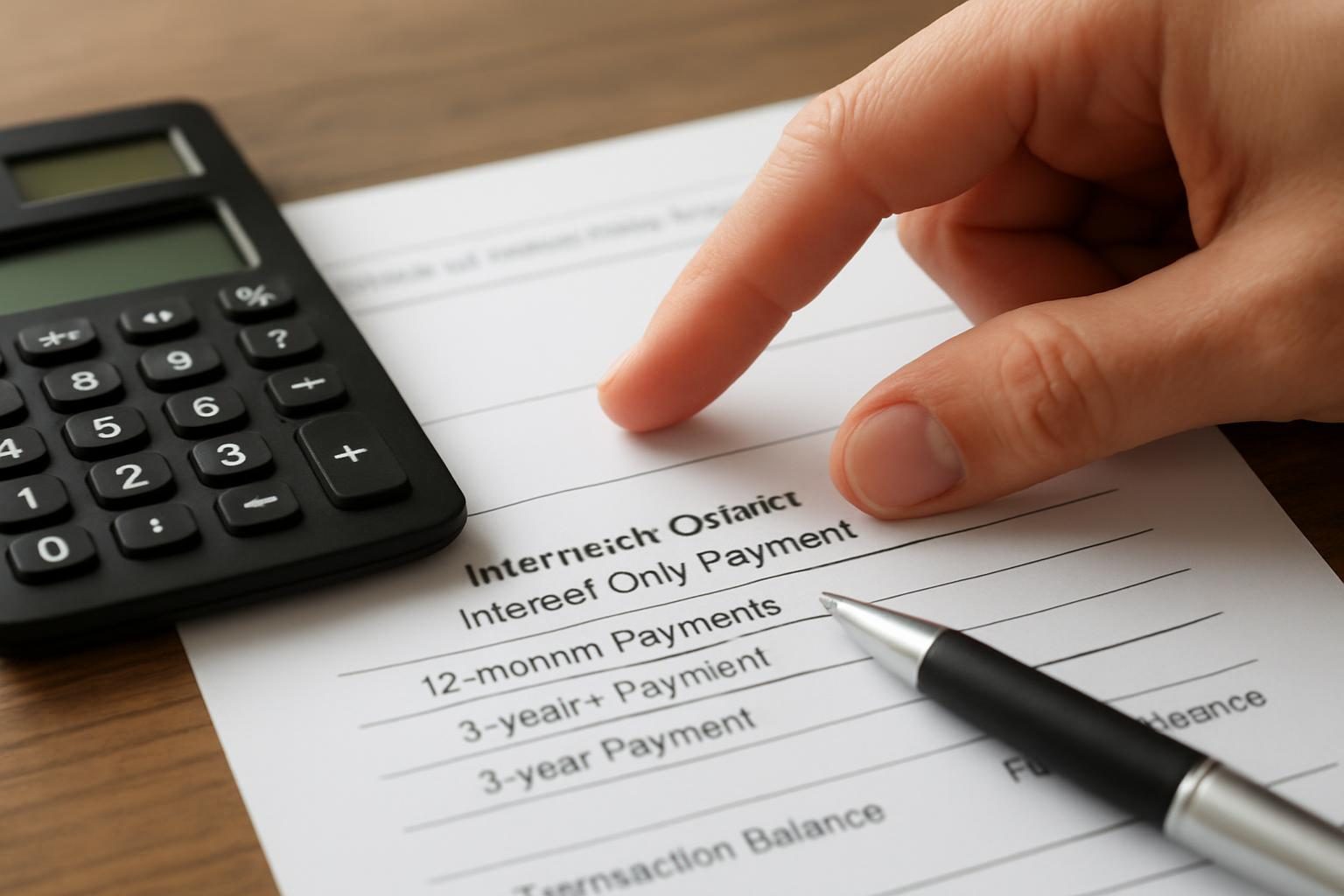
That jump is the payment shock many borrowers don’t plan for. An interest-only payment on $40,000 at 9% is $300 a month. Once amortization starts over a 15-year repayment term, the payment on the same balance would be roughly $406, and it would be higher if the balance hasn’t been touched.
The takeaway: during the draw period, the minimum payment is not a payoff plan. It’s a rent payment on borrowed money.
Variable Rates: Why Your HELOC Cost Can Change Without You Doing Anything
Most HELOCs carry a variable rate tied to an index, commonly the prime rate, plus a margin set by the lender. When the index moves, your rate moves, and your interest-only payment moves with it.
- Rate up 1 point on $40,000: about $33 more per month in interest.
- Rate up 3 points: about $100 more per month.
- Rate cap: Many lines have a lifetime cap, but it may be far above today’s rate.
This is the strongest argument for paying early: a smaller balance is a smaller bet on where rates go. Some lenders also let you lock part of the balance at a fixed rate; ask whether yours does and whether that carries a fee.
An interest-only HELOC payment keeps the lender whole while your balance stays exactly where it started.
Paying Off a HELOC Early: Worked Example With Extra Principal
Let’s compare three approaches on a $40,000 balance at a 9% rate. For simplicity, we’ll assume the rate stays flat (it likely won’t), and we’ll treat the draw period as lasting 5 more years followed by a 15-year repayment term. All figures are estimates.
Scenario A: Minimum payments only
- 5 years interest-only at about $300/month: roughly $18,000 paid, balance still $40,000.
- 15 years of repayment at about $406/month: roughly $73,100 paid.
- Total interest: about $51,100.
Scenario B: Add $200/month of principal from day one
- Payment of about $500/month ($300 interest plus $200 principal, with interest shrinking as the balance falls).
- The balance is gone in roughly 6 years and 3 months.
- Total interest: about $13,500.
Scenario C: Wait until repayment begins, then add $200/month
- Five interest-only years first (about $18,000 in interest, no principal reduced).
- Then about $606/month against a $40,000 balance for roughly 7 years.
- Total interest: about $29,000 or more.
Starting early saves roughly $15,000 more than waiting, with the same $200 of extra monthly cash. The reason is simple: interest accrues daily on the balance, so principal retired in year one avoids years of interest that principal retired in year six never does.

Pro tip: Treat the draw period like a loan with a deadline. Divide your balance by the number of months you want to be debt-free and pay that amount plus interest. Plug your own numbers into the HELOC payoff calculator to see the draw versus repayment split.
How to Make Sure Extra Payments Actually Reduce Principal
Not every extra dollar automatically lowers your balance. Some lenders apply surplus funds to the next billing cycle’s interest or hold it as a prepayment. Here’s how to avoid that.
- Read your online portal options. Look for a “principal-only” or “additional principal” field.
- Call or message the lender if there isn’t one. Ask how overpayments are applied and get the answer in writing.
- Verify on your next statement. Your principal balance should drop by the extra amount.
- Automate it. A fixed monthly overpayment beats good intentions.
If you have several debts, decide where HELOC dollars rank. Use the debt payoff plans guide to compare snowball and avalanche ordering. A HELOC at 9% should usually rank below a credit card at 24% under the avalanche method.
Early-Closure Fees, Prepayment Terms and Other Fine Print
Paying down the balance is almost always allowed. Paying it to zero and closing the line is where fees can appear. Before you do, find these items in your agreement:
- Early-closure or early-termination fee: Some lenders charge a flat fee, or a percentage, if you close within a set window, commonly the first two to three years. Amounts vary widely, so check yours.
- Waived-cost clawbacks: If the lender covered your appraisal or origination costs, they may recoup them if you close early.
- Annual or inactivity fees: Keeping a zero-balance line open can cost money, so weigh that against closing fees.
- Lien release: Once the line is closed, make sure the lien on your home is formally released and recorded. Keep the confirmation.
The HELOC is secured by your house, so unpaid balances put your home at risk. For general background on how these lines work, the Consumer Financial Protection Bureau publishes a plain-language guide at consumerfinance.gov.
Paying the balance to zero is not the same as closing the line, and the difference can cost you a fee.
Other Ways to Speed Up HELOC Payoff
- Use windfalls. Tax refunds and bonuses are principal-shrinking opportunities. See how to use a bonus or inheritance to pay off debt.
- Refinance into a lower or fixed rate. A fixed-rate home equity loan or a lower-margin line can cut interest, but weigh closing costs against savings. The early payoff calculator helps you test the break-even.
- Don’t re-borrow. Drawing again resets your progress.
- Know the strategy tradeoffs. Some people use a HELOC to chase mortgage payoff; read velocity banking explained before trying it, because it’s risky if your discipline slips.
Curious whether your current rate is competitive? You can request free, no-obligation rate options with the form on this page.
Frequently Asked Questions
Should I pay down my HELOC during the draw period?
In most cases, yes. Interest-only minimums leave the balance untouched, so anything extra you pay reduces the base that interest is charged on. Just confirm any extra goes to principal and keep emergency savings intact.
Does paying off a HELOC early hurt my credit?
Paying down the balance generally helps by lowering your utilization on that line. Closing the account can affect your credit mix or average account age slightly, usually a small effect. A qualified credit counselor can speak to your specific situation.
Is there a penalty for paying off a HELOC early?
Not always, but some lenders charge an early-closure fee if you close the line within a set period. Check your agreement and ask the lender directly before closing.
What happens when my HELOC draw period ends?
You can no longer borrow, and your payment typically changes to principal plus interest over the repayment term. Your required payment can rise noticeably, which is why many borrowers pay down principal before that date.
This article is educational and not personalized financial advice. Consider talking with a qualified financial professional about your situation.
Get free options to lower your HELOC or loan rate
A partner will share free, no-obligation options like refinancing or consolidation so you can compare before you decide.