
Quick answer: A paying off loan early calculator takes your balance, interest rate, remaining term and an extra monthly payment, then shows how much interest you save and how many months disappear from the loan. Enter the numbers from your latest statement, test two or three extra-payment amounts, and check your loan agreement for prepayment penalties before you commit.
Key takeaways
- You need four inputs: current balance, APR, months remaining and extra payment.
- Interest saved is the gap between the original schedule and the faster one.
- Small extra payments made early in the loan save the most.
- Always check for a prepayment penalty and make sure extra money goes to principal.
Paying a loan off early is one of the few money moves where the math is simple and the result is guaranteed. Every dollar of extra principal stops earning interest for the lender. The calculator just shows you how big that effect is before you spend a cent.
Want help making the rate itself smaller? You can request free options to lower your interest rate using the form on this page.
What a Paying Off Loan Early Calculator Does
The calculator builds two payoff schedules side by side. The first is your current plan, where you pay the regular monthly amount until the loan ends. The second adds your extra payment every month and recalculates how fast the balance falls.
It works for any fixed-rate installment loan:
- Auto loans with a set term like 48, 60 or 72 months
- Student loans, federal or private
- Personal loans and debt consolidation loans
- Mortgages and home equity loans
Credit cards work differently because the minimum payment changes each month. For those, use the credit card payoff calculator instead.
Step 1: Gather the Four Numbers You Need
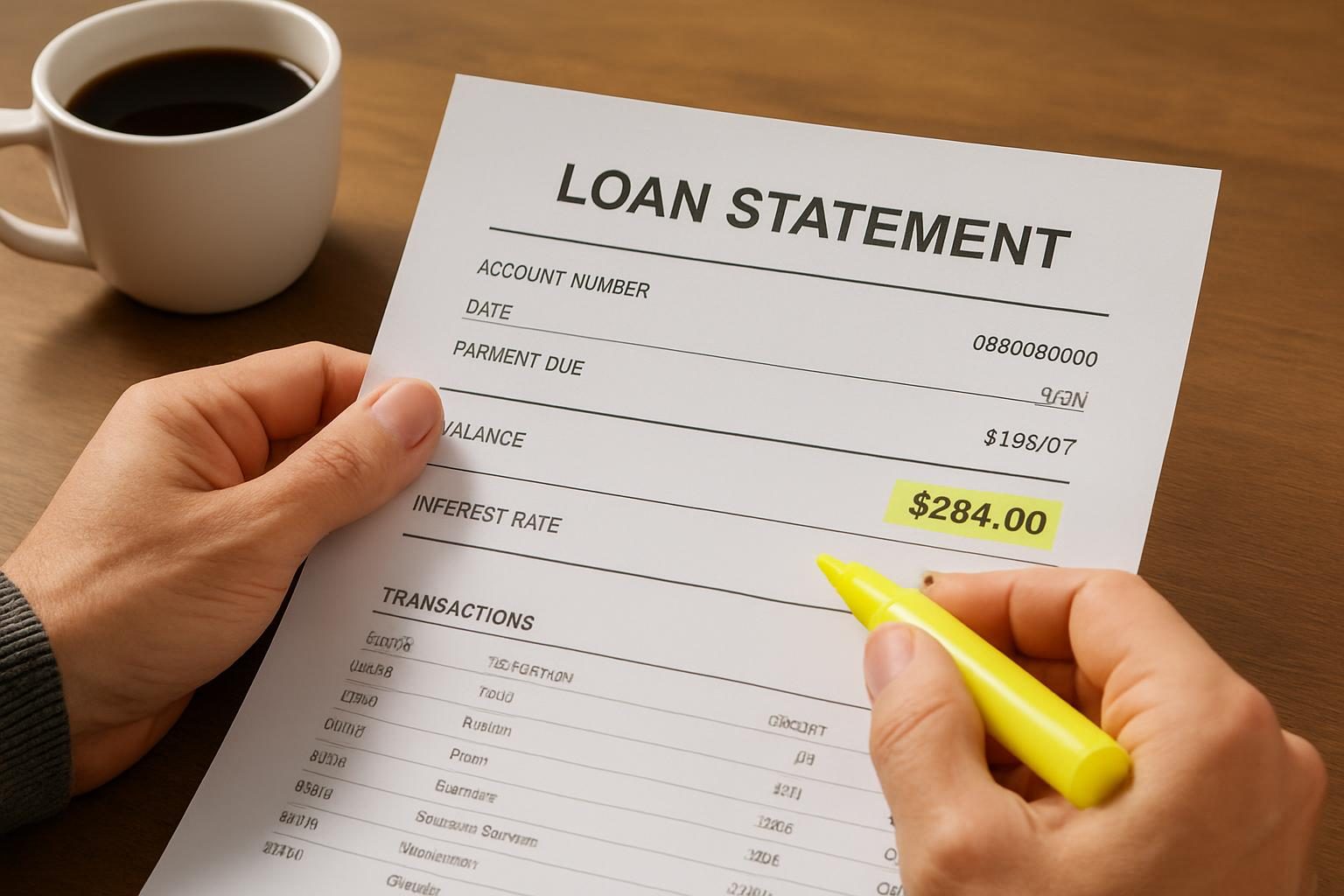
Pull up your most recent statement or online loan account. Guessing here is what makes calculator results useless.
- Current balance. Use the principal balance, not the original loan amount. If your lender lists a “payoff amount,” that includes interest accrued to date and runs slightly higher.
- Interest rate (APR). Use the rate on your statement. For loans with fees baked in, the APR may be a bit higher than the note rate; either works for estimates.
- Remaining term. Count months left, not the original term. A 60-month car loan with 38 payments made has 22 months remaining.
- Extra payment. Choose a monthly amount you can sustain, or a one-time lump sum if you are using a tax refund or bonus.
Pro tip: Run three scenarios, not one. Try a modest extra amount, a stretch amount and a lump sum. Seeing all three makes it easier to pick a number you will really stick with.
Step 2: Enter Your Numbers and Run the Scenarios
Type in the four inputs and compare the results. Here is an illustrative example using round numbers (estimates only, since your lender’s exact method may differ slightly).
- Loan: $20,000 balance at 7% APR with 60 months remaining
- Regular payment: about $396 per month
- Total interest on the normal schedule: roughly $3,760
- With $100 extra per month: paid off about 11 months sooner, saving roughly $700 in interest
- With $200 extra per month: paid off about 19 months sooner, saving roughly $1,150 in interest
Notice that doubling the extra payment does not exactly double the savings. The first extra dollars do the heaviest lifting because they cut the balance while it is still large.
For loan-specific versions, see the car loan payoff calculator and the student loan payoff calculator.

Every extra dollar of principal stops earning interest for the lender, starting the day it posts.
How to Read Interest Saved and Months Cut
Most calculators give you a results panel. Here is what each line really tells you.
Interest saved
This is total interest on the original schedule minus total interest on the faster schedule. It is money you keep. If the calculator says $1,150, that is $1,150 you never send to the lender, assuming the loan stays on the same fixed rate.
Months cut
This is how much sooner you reach a zero balance. It also reveals your new payoff date, which is a handy goal for a tracker or calendar.
New total cost
Add the extra payments to the shortened regular payments and compare the grand total to the original. The difference should equal your interest saved. If it does not, the calculator may be treating the extra as a separate expense.
A quick return-on-extra-payment check
Divide interest saved by total extra dollars paid. In the $200 example above, you would pay about $3,800 extra over 19 months of acceleration and save roughly $1,150 in interest. The more useful comparison is your loan’s APR: paying down a 7% loan is a guaranteed, risk-free 7% return on that money. Compare it against alternatives using the pay off debt or invest rule by interest rate.
Check for Prepayment Penalties Before You Pay Extra
Most consumer loans today allow early payoff, but not all. Before sending extra money, confirm three things.
- Prepayment penalty clause. Search your loan agreement for “prepayment,” “early payoff” or “penalty.” Some personal loans and a minority of auto loans charge a fee or use precomputed interest.
- Precomputed interest. On these loans, the total interest is baked in at signing, so paying early may save much less than a calculator suggests. Ask your lender how interest is calculated.
- Extra payment application. Many servicers apply extra money to the next due date or to future interest unless you specify “principal only.” Use the online option for principal-only payments, or write it on the check memo line.
Federal student loans carry no prepayment penalty, and for most residential mortgages, rules limit penalties to certain loan types and the first few years. The Consumer Financial Protection Bureau explains how these penalties work at consumerfinance.gov. When in doubt, call your servicer and ask for the answer in writing.
A calculator shows what could happen; your loan agreement decides what will happen.
Ways to Fund the Extra Payment
Once the math looks good, the next question is where the extra money comes from. A few practical sources:
- Round up. Pay $425 instead of $396 and treat the difference as a fixed bill.
- Windfalls. Tax refunds, bonuses and side-income lump sums work well as one-time principal hits.
- Freed-up payments. When one loan ends, redirect its payment to the next. That is the core of the debt payoff plans approach.
- Spending challenges. A short debt payoff challenge can generate a quick lump sum.
If you have several debts, use the debt payoff calculator or the Debt Burn-Down Calculator to decide which loan gets the extra dollars first. For a broader checklist, read how to pay off any loan faster.
When a Lower Rate Beats Extra Payments
The calculator also reveals a limit: if your rate is high, extra payments fight an uphill battle. Cutting the rate can save as much as paying extra, and you can do both.
Options worth comparing include refinancing a car or student loan, a consolidation loan for several balances, or a 0% balance transfer for credit card debt. Refinancing is not always a win, so review when car loan refinancing lowers your payment first. You can also request free options to lower your rate from partners before you decide.
Run the numbers on a personal loan next if that is the balance you are tackling.
Frequently Asked Questions
How accurate is a loan early payoff calculator?
It is accurate for fixed-rate loans that charge simple interest, which covers most car, student and personal loans. Small differences come from how your lender counts days and posts payments, so treat results as a close estimate and confirm with your servicer.
Is it better to pay extra every month or make a lump sum?
Earlier is better. A lump sum now saves more than the same total spread out later because it cuts principal sooner. Regular extra payments are easier to sustain, though, so the best choice is the one you will actually keep doing.
Will paying off a loan early hurt my credit score?
You may see a small, temporary dip when an account closes, since it can shorten your credit history mix. The effect is usually minor, and the interest savings typically outweigh it. A qualified financial professional can speak to your specific situation.
Does extra payment lower my monthly bill?
Usually not. On most loans, extra payments shorten the term and your required payment stays the same. If you want a lower monthly payment, ask about recasting or refinancing instead.
Get free options to lower your loan interest rate
A partner will share free, no-obligation options such as refinancing, consolidation or a 0% balance transfer so you can compare.


